Masroor Temples, Rock-cut Hindu temple complex in Kangra district, India
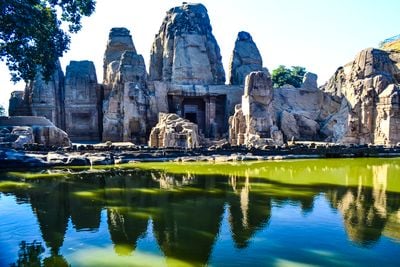
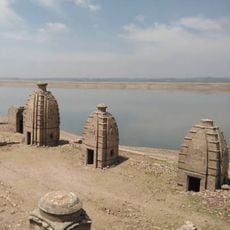
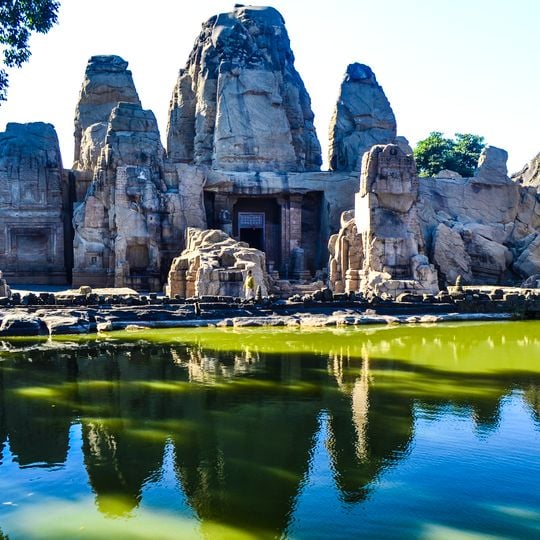
Masroor Temples are a rock-cut Hindu complex of the early 8th century in the Kangra Valley, Himachal Pradesh, facing northeast toward the Dhauladhar range. The main temple stands on a square plan within a mandala of smaller shrines, all cut from one monolithic rock with shikharas and a sacred water pool. Three entrances open on the northeast, southeast and northwest, two of them unfinished.
The complex was built in the first half of the 8th century in the Nagara style of Central India, linked by Michael Meister to the patronage of King Yasovarman. It was first reported by Henry Shuttleworth in 1913 and surveyed by Harold Hargreaves of the Archaeological Survey of India in 1915. The plan was more ambitious than what survives: two of the three entrances are incomplete, a fourth was started and abandoned, and much sculpture was lost, most likely to earthquakes.
The complex is dedicated to Shiva, Vishnu, Devi and Saura traditions, and its reliefs show Vedic and Puranic gods while friezes narrate legends from Hindu texts. The name Masrur comes from the local word for the sacred pool beside the shrines, where the lower carvings are reflected in the water.
The site sits at an elevated location offering good views of the surrounding landscape, and private transportation is needed since public buses rarely reach the area. Wear sturdy shoes when visiting, as walking across the carved stone surfaces requires steady footing on uneven ground.
The complex was first reported by Henry Shuttleworth in 1913 and surveyed by Harold Hargreaves of the Archaeological Survey of India in 1915. Hargreaves noted a fourth entrance had been planned and begun, a detail later archaeology teams ignored, which led to the site being misidentified in early reports.
The community of curious travelers
AroundUs brings together thousands of curated places, local tips, and hidden gems, enriched daily by 94,675 contributors worldwide.