Ram Jhula Bridge, Cable-stayed bridge in Nagpur, India
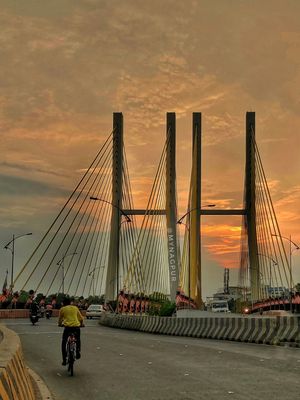
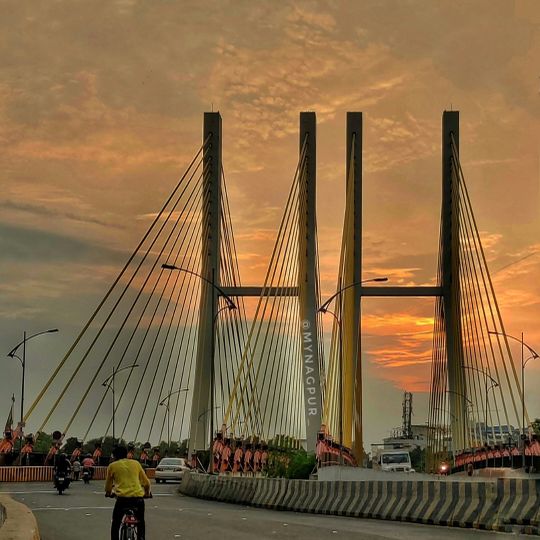
Ram Jhula Bridge is a cable-stayed bridge in Nagpur that crosses over railway tracks just north of the main junction station, supported by two parallel towers. It carries three lanes for road traffic alongside a dedicated track for the Metro Blue Line.
The first bridge at this location was built in 1927 under British rule to link Old Nagpur and New Nagpur across the Great Indian Peninsular Railway lines. The current structure replaced it when the city began building its metro network and needed a wider crossing to carry both road and rail traffic.
The bridge connects older parts of the city with newer neighborhoods, and crossing it is part of the daily routine for many people who live and work on opposite sides of the railway lines. Vendors, commuters, and schoolchildren all share the same passage at different hours of the day.
The bridge is open to pedestrians, cyclists, and vehicles, with separate lanes clearly marked for each. Crossing during the morning or evening rush can be slow, so planning the visit outside those hours makes the experience more comfortable.
The bridge was built through a shared arrangement between two separate government bodies, one responsible for road traffic and one for the metro, which required them to coordinate closely on the same structure. This kind of joint infrastructure is still relatively rare in Indian cities.
The community of curious travelers
AroundUs brings together thousands of curated places, local tips, and hidden gems, enriched daily by 91,257 contributors worldwide.