Labyrinth of Porsenna, Underground archaeological site in Chiusi, Italy
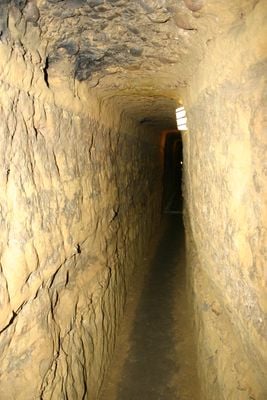
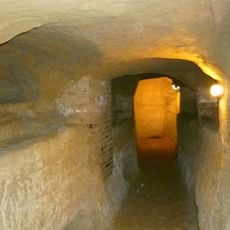
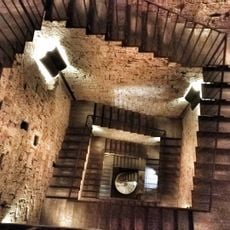
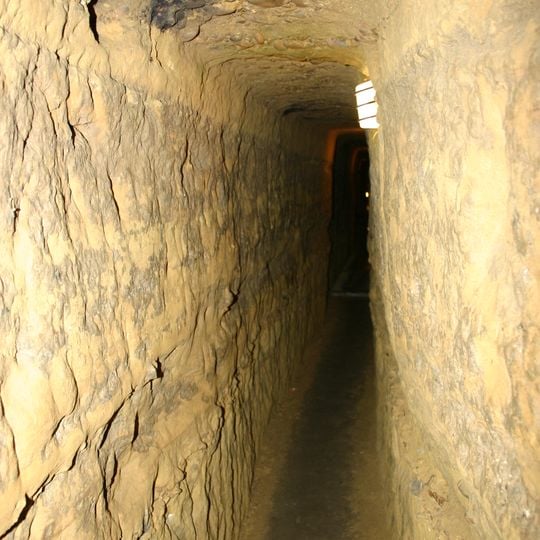
The Labyrinth of Porsenna is an underground tunnel network beneath Chiusi's historic center, carved by the Etruscans into sandstone. The passages are narrow and descend to depths of about 25 meters, connecting to reservoirs and cisterns that collected groundwater.
The Etruscans created this system roughly 2500 years ago to store water and connect their city underground. Archaeologists rediscovered the tunnels in the 1920s while searching for legendary treasures attributed to King Porsenna in ancient Roman writings.
The passages feature Etruscan carvings and markings that reveal how this ancient civilization managed water and organized daily life underground. Visitors can observe the practical design choices that reflect what mattered most to the people who built these tunnels.
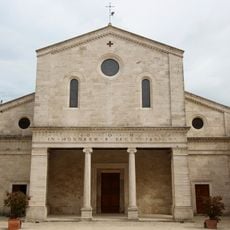
Visitors must arrange entry in advance through the Cathedral Museum and wear protective gear while exploring. The passages have limited lighting and can be damp, so sturdy footwear and layered clothing are recommended.
The Etruscans partly hand-carved these passages into soft sandstone, following the natural shape of the rock rather than forcing it into rigid lines. This approach shows how they adapted their engineering to work with what they found.
The community of curious travelers
AroundUs brings together thousands of curated places, local tips, and hidden gems, enriched daily by 93,000 contributors worldwide.