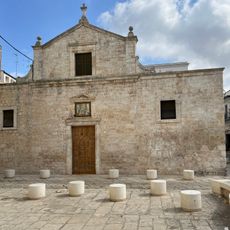
Grotta di Turi, Religious cave in Turi, Italy
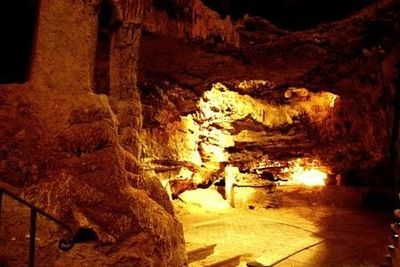
Grotta di Turi is a religious cave in Turi, Italy, extending 12 meters deep across multiple levels with two stone altars and an intricate network of passages beneath a church structure. A monumental staircase with stone steps and wrought iron railings connects the cave to the upper church, built in 1728 to allow visitor access.
The cave was rediscovered during the Naples plague of 1656-1658 and transformed from a forgotten site into a renewed place of religious devotion and community gathering. This rediscovery marked the beginning of its use as a refuge and place of prayer for the local population.
The cave floor is covered with 238 handmade ceramic tiles showcasing Apulian craftsmanship through human figures, landscapes, and floral patterns in turquoise, brown, and yellow. These tiles are evidence of the region's artistic skill and shape the appearance of this sacred space.
Access to the cave is via wide, stable stairs that are easy to navigate, with lighting clearly marking the path. The interior has consistent temperature and air circulation, making a visit comfortable regardless of the season.
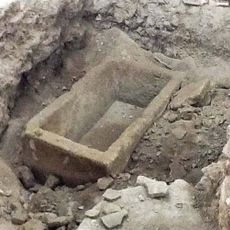
Archaeological finds within the cave, including an ancient altar, a cross, and two ampoules, suggest that Saint Oronzo conducted religious ceremonies during times of persecution. These artifacts offer a direct glimpse into early Christian worship at this location.
The community of curious travelers
AroundUs brings together thousands of curated places, local tips, and hidden gems, enriched daily by 91,945 contributors worldwide.