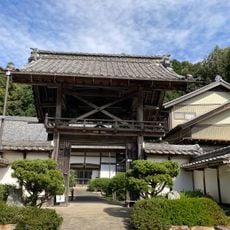
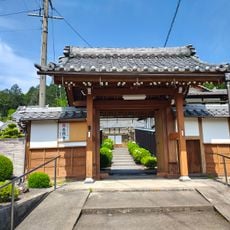
Shinchōkoku-ji, Buddhist temple in Seki, Japan.
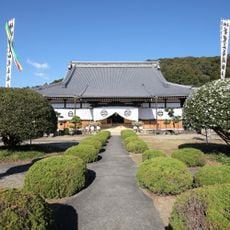
Shinchōkoku-ji is a Shingon Chisan-ha temple in Seki, Gifu Prefecture, founded in 1222 by the monk Gonin. Its main hall, rebuilt in 1460, measures 12.94 by 14.07 meters, and its three-story pagoda, rebuilt in 1463, stands 20.1 meters tall. Both are thatched with cypress bark and designated Important Cultural Properties.
Founded in 1222 by the monk Gonin on the order of Emperor Go-Horikawa, the temple was built as a seven-hall complex with sixteen sub-temples by 1226. It burned in 1300 and was rebuilt by Nikaidō Yukifuji, lord of Inaba Castle, then lost buildings again to fire in 1457 before being restored with help from the Seki lords. Many sub-temples were abolished in 1868.
Locals call the temple Kitta Kannon, after the Yoshida district, and it serves as the 22nd stop on the Mino Shikoku pilgrimage and the 33rd on the Mino Thirty-Three Kannon route. It also honours Bishamonten as one of the Mino Seven Lucky Gods. The hibutsu Eleven-Headed Kannon is shown only in the March of the year of the Horse, while the Amida statue inside its cabinet is unveiled each 18 March.
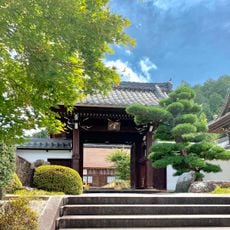
The temple is a 10-minute walk from Sekiguchi Station and 15 minutes from Seki Station on the Nagaragawa Railway; the Gifu bus stop Yoshida-cho is 2 minutes away. The Niō Gate was moved to its present position in the approach in 1962. The temple stands in Hasedera-cho 1, Seki.
The guest hall (Kyakuden) has a garden whose layout is modelled on the Taima-dera mandala, a detail most visitors walk past. The hall itself, with a copper-sheet roof, dates from the early Edo period and is a designated Important Cultural Property.
The community of curious travelers
AroundUs brings together thousands of curated places, local tips, and hidden gems, enriched daily by 94,219 contributors worldwide.