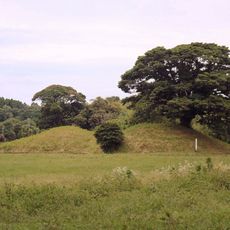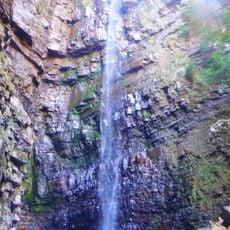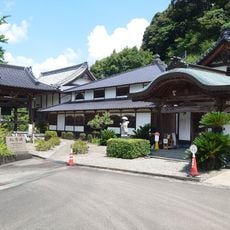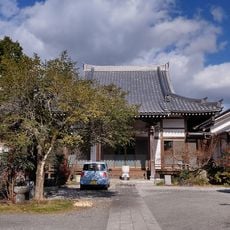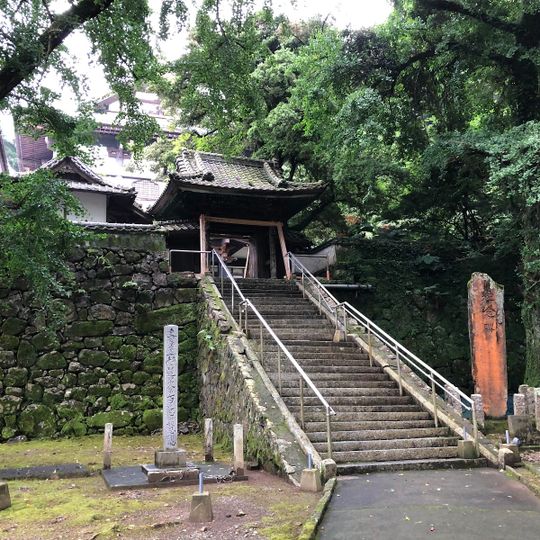
Hyūga myōkoku-ji, Buddhist temple in Hyūga, Japan.
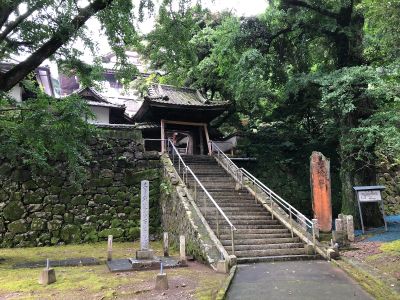
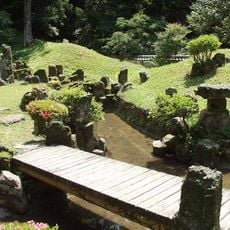
Hyūga myōkoku-ji is a Nichiren Buddhist temple in the Hososhima district of Hyūga, Miyazaki Prefecture, facing Hososhima Port. Its grounds include a garden and a mountain gate designated a National Place of Scenic Beauty, and a pair of ginkgo trees estimated at 300 years old. The temple also keeps a Kamakura-period Fudō Myōō statue and a pair of komainu from the old Myōō-dō.
Founded as a Shingon hall on Mount Komenoyama above Hososhima port, it became a Hokke hall in 1333 when the priest Satsuma Hōin converted under Nichiren teaching. In 1342 his successor Nichiei, the first Kyushu-born Nichiren monk, named it Myōkoku-ji. The temple passed through several Nichiren branches, joined the Nichiren-shū in 1872, and returned to it in 1976.
The temple's name comes from Kōson Jufuku-zan Honkoku Myōkoku-ji, and worshippers call it the mountain that brings fortune. Annual rites include the Hana Matsuri and Kishimojin festival on 1 May, the Segaki-e on 2 August, the Ohagi Matsuri on 1 November and the Oeshiki on 23 November. On the old lunar date of 15 January, the Jūnisha-mairi tradition linked to Nichiyō is still held.
The temple stands at 373 Hososhima, Hyūga, Miyazaki, on the hillside above Hososhima Port, not in the city centre. The garden and sanmon gate are a nationally designated Place of Scenic Beauty. The garden is viewed on occasions such as the November 23 Oeshiki; the grounds are active, so check before entering worship halls.
The temple keeps two mandalas brushed by its founders: one by Nichigo, who was sent from Kyoto's Honkoku-ji, and one by Nichiei, the first Kyushu-born disciple of Nichiren. Many other temple treasures, including a mandala in Nichiren's own hand, were lost in the confusion of the 1940s and 1950s.
The community of curious travelers
AroundUs brings together thousands of curated places, local tips, and hidden gems, enriched daily by 93,851 contributors worldwide.