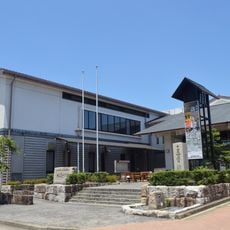
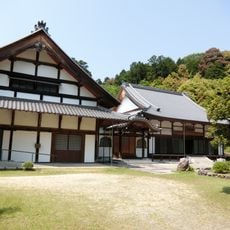
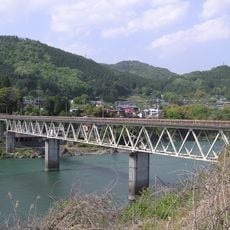
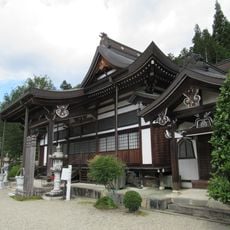
Hichisō Precambrian Museum, Mineralogical museum in Hichiso, Japan.
The Hichisō Precambrian Museum is a mineralogical museum in Hichiso, Gifu Prefecture, dedicated to rocks and minerals from Earth's earliest geological periods. The collection centers on Precambrian specimens, meaning material formed before complex life appeared on the planet.
The museum opened in 1996, following the discovery in the 1970s of very old rocks in a ravine near the Hida River. That find prompted local efforts to study and display material that placed the region at the center of Japan's geological story.
The museum's mascot, Rekkī-kun, is a rice-ball-shaped rock with arms and legs, named by Professor Mamoru Adachi. The museum's name became a local issue in 2019, when research showed a 2.5-billion-year-old gneiss from Tsuwano, Shimane, was older than Hichisō's stone. Tsuwano donated a piece of that gneiss in 2020, and a ceremony marked the museum's reopening that August.
The museum sits in a rural area of Gifu Prefecture, so reaching it takes some planning, especially if traveling by public transport. Checking opening days in advance is a good idea, as hours may vary depending on the season.
The museum's name refers to a gneiss cobble from the Hida River bed, estimated at about 2 billion years old and displayed as Japan's oldest stone for nearly 50 years. In 2019 a roughly 2.5-billion-year-old gneiss from Tsuwano, Shimane, was announced; Tsuwano donated a piece in 2020 so the museum could keep its name.
The community of curious travelers
AroundUs brings together thousands of curated places, local tips, and hidden gems, enriched daily by 93,916 contributors worldwide.