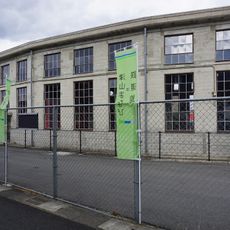
Hall of former Senkyo Primary School, Educational heritage building in Maniwa, Japan.
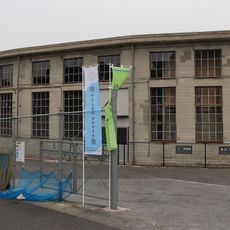
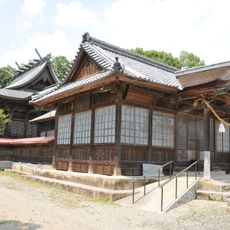
The former Senkyo Primary School is a two-storey wooden building completed in 1907 in Maniwa, Okayama Prefecture, designed by Saburohachi Egawa. A central block with entrance, staff room and first-floor assembly hall carries a mansard roof, two projecting gables and a round dormer window bearing a school emblem shaped like a takasebune boat; symmetrical classroom wings extend east and west. The gable walls have lattice windows in a Venetian style.
Completed in 1907, the two-storey wooden school was designed by Eikawasaburohachi and cost about 18,000 yen, nearly three times Kuze town's annual budget. It served as a school until 1990, when the present Senkyo Elementary School moved to a new building. It was designated a National Important Cultural Property on 13 May 1999.
The building is now part of the Kuse Espace Land cultural complex. Its former classrooms serve as a library and exhibition rooms, the staff room is a meeting room, the auditorium a gathering space, and the schoolyard an outdoor exhibition area. The name Senkyo comes from a phrase in the Book of Changes meaning to rise and move up.
The building stands at 17-1 Nabeya in Maniwa and now serves as a facility of the Kuse Espas Land cultural complex: former classrooms hold a library and exhibition rooms, the staff room is a meeting room, the hall a gathering space, and the schoolyard an outdoor display area. It is a working public venue, so confirm opening days and hours before travelling.
The school appears in the 2005 film Always: Sunset on Third Street as the primary school attended by the character Ippei Suzuki, and its classrooms were used for scenes of the TV drama Carnation. The roof once carried an iron crest on the main ridge, removed during wartime scrap collection in the Showa era.
The community of curious travelers
AroundUs brings together thousands of curated places, local tips, and hidden gems, enriched daily by 94,978 contributors worldwide.