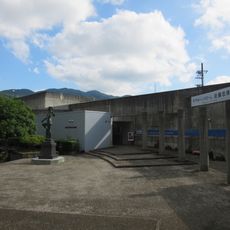
本法寺, Buddhist temple in Toyama, Japan.
Honpoji is a Hokke-shū Jimmon-ryū branch temple in Miyakoshi, Yatsuo-machi, Toyama, with the mountain name Chōshōzan. Its main image is Shakyamuni Buddha with four bodhisattvas. The temple was founded in 1316 in the Nirehara district and moved to its present site during the Meiwa era (1764–1771).
Founded in 1316 by Nichijun, a disciple of the priest Nippo, the temple first stood in the Yabuhara estate at Jōnō (today Yatsuo, Toyama). It was moved to its present site in Miyagoshi during the Meiwa era (1764–1771). It is a branch temple (betsuin) of the Hokke-shū Jinmon school, headed by Honjō-ji in Sanjō, Niigata.
The temple holds a collection of 21 Lotus Sutra Mandala paintings that represent important works of religious art in Japan. Visitors can view these pieces and understand how they connect to the spiritual practices of the Hokke Buddhist tradition.
The temple stands in the Miyakoshi area of Yatsuo, Toyama, and is reached from the Yatsuo district; the grounds moved to this site during the Meiwa era (1764–1771). Each year on 6 August a mushiboshi rite and picture-sermon (etoki) are held, when the Lotus Sutra mandalas are aired. The temple is a branch temple (betsuin) of the Hokke-shu Jimmon school, headquartered at Honjo-ji in Sanjo, Niigata.
The temple's 21 Lotus Sutra mandala paintings are said to have emerged shining from a tree found in the sea off Hoetsu in Imizu District. The temple displayed them publicly in Edo, and when the 10th shogun Tokugawa Ieharu's concubine was pregnant, they were kept at Edo Castle for months for safe-childbirth prayers. On 6 August each year a drying ceremony and picture-sermon are held.
The community of curious travelers
AroundUs brings together thousands of curated places, local tips, and hidden gems, enriched daily by 93,599 contributors worldwide.