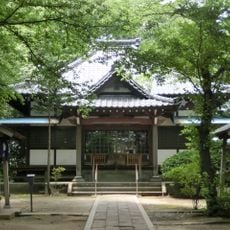
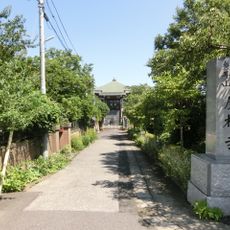
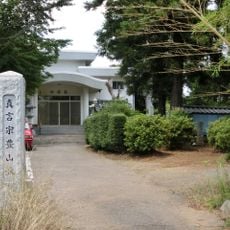
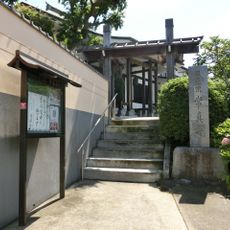
Tōzen-ji, Buddhist temple in Matsudo, Japan.
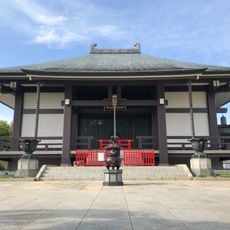
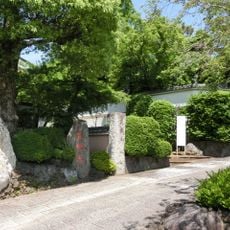
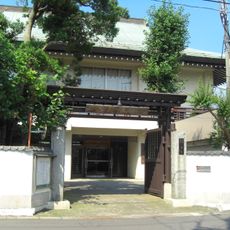
Tōzen-ji is a Jōdo-shū temple in the Kogane district of Matsudo, founded in 1481 and moved to its present site during the Tenbun era (1532–1555). Its grounds hold a main hall, bell tower, and a rebuilt Kannon hall (1996), along with ancient trees and a 330-year-old weeping cherry.
Tōzen-ji was founded in 1481 by the monk Keiyo Gudon Unko, a native of Shinano Province, at Nekine, about one kilometre north-east of the present site. Around 1532–1555 it was moved here, and in the early Edo period it became one of the eighteen Kantō danrin, the Tokugawa seminary temples. By 1722 it held over twenty buildings and counted 35 branch temples; in the early Meiji era it became an imperial prayer temple.
The temple's name is associated with the Jōdo (Pure Land) school, and its grounds hold some 35 branch temples' worth of history as one of the Kantō Eighteen Danrin, the Edo-period seminaries. Today it draws crowds for the April Goki festival, the October Burari-ichi flea market run by the shopping street, and the New Year's Eve bell.
Tōzen-ji is about a 5-minute walk from the south exit of JR Kita-Kogane Station on the Jōban Line, or about 2 minutes from the Kogane Elementary School bus stop on the Keisei bus. The temple stands in the Kogane district of Matsudo, Chiba Prefecture.
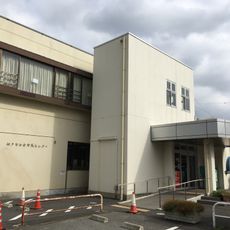
The temple's weeping cherry tree is about 330 years old, and the temple also keeps a "crane-and-turtle" pine, a pairing that stands for longevity. The temple grounds were named one of the Kantō Eighteen Danrin, and old trees from that period still stand. The temple kindergarten, founded in 1963, revives the terakoya schooling once held in its study halls.
The community of curious travelers
AroundUs brings together thousands of curated places, local tips, and hidden gems, enriched daily by 94,264 contributors worldwide.