Yōkō-ji, Buddhist temple in Hakui, Japan.
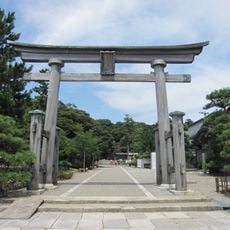
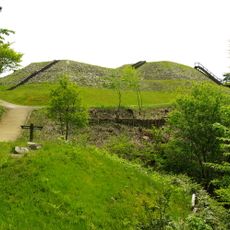
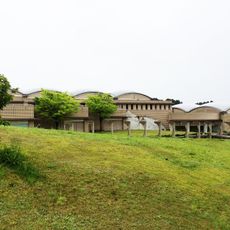
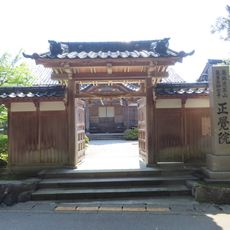
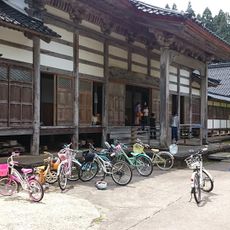
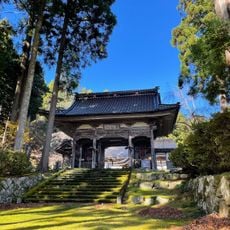
Yōkō-ji is a Sōtō Zen temple in Sakai, Hakui, Ishikawa Prefecture, founded in the early 14th century by Keizan Jōkin. Entering the mountain gate, visitors face the hattō (dharma hall) with the kuri and shōin to the right and the sōdō, shuryō and bell tower to the left, linked by covered corridors. Behind the hattō stands the Dentō-in founder's hall, and beyond it the burial mound called Gorōhō.
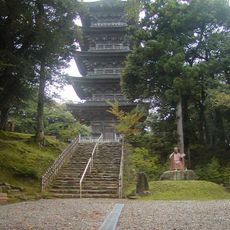
Keizan Jōkin founded Yōkō-ji in 1317 on land in Noto province donated by Shigeno Nobunao and his wife Sonin, after her brother Sakō Yorimoto's residence was rebuilt as the monastery. Keizan made it his favoured temple, reserving the abbacy for his own Dharma heirs and introducing the rotating rinjū system, later adopted across the Sōtō school. In 1323 he established the Gorōhō chapel as a mausoleum for relics of the Sōtō patriarchs. The Ashikaga shogunate funded a three-storey pagoda during Mugai Chikō's abbacy.
The temple serves as a place where visitors can encounter Buddhist statues and ancient texts that hold spiritual meaning for practitioners. People come to spend time in the halls and gardens, experiencing the religious life that continues here today.
Yōkō-ji lies in Sakai-machi, Hakui, about 15 minutes by car from JR Hakui Station. The main gate opens onto the dharma hall, with the kitchen and study to the right and the monks' hall, bell tower and quarters to the left, all linked by covered corridors. Behind the dharma hall stands the Den-tō-in founder's hall and the Gorōhō mound. The峨山道 pilgrimage route connects the temple with Sōji-ji's head temple.
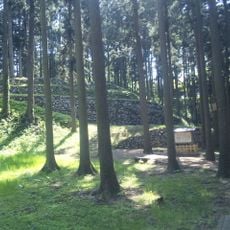
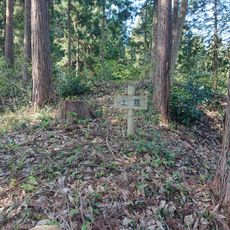
On the hill behind the temple is Gorōhō, a burial mound holding relics of five Sōtō Zen patriarchs, including a bone fragment of Dōgen and a sutra copied by Koun Ejō in his own blood. Keizan Jōkin established it in 1323 as a mausoleum meant to draw monks from all Sōtō monasteries.
The community of curious travelers
AroundUs brings together thousands of curated places, local tips, and hidden gems, enriched daily by 93,495 contributors worldwide.