柄杓山城, Mountain fortress in Gunma Prefecture, Japan.
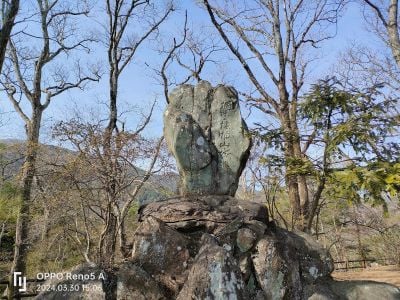
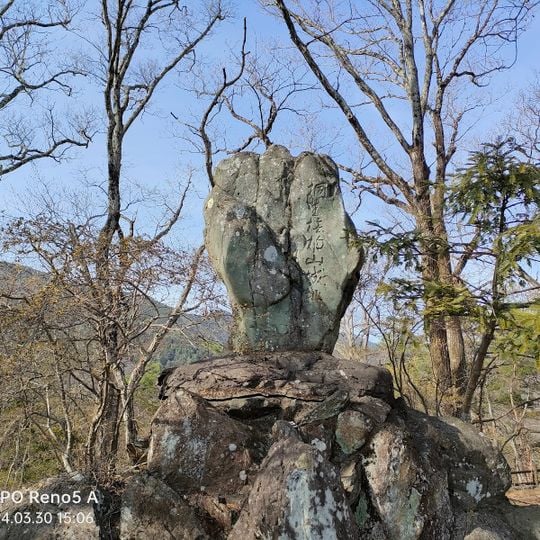
Hishakuyama Castle (also called Kiryu Castle) is a yamajiro built on the summit of a castle hill rising on the west bank of the upper Kiryu River, about 5 km north of central Kiryu in Gunma Prefecture. From the honmaru at the top, the ninomaru and sannomaru lie to the northwest, separated by dry moats (horikiri). Earthwork remains survive at the Sakanaka enclosure on the southeast slope of the honmaru and the Kita enclosure north of the ninomaru.
Kiryu Kunitsuna of the Sano clan, a branch of the Ashikaga, built Hishakuyama Castle in 1350. In 1351 a roughly 2,500 m defensive moat was cut to divert water from the Watarase River into the Kiryu River; it was later filled in and part of it is now Columbus-dori. The Kiryu clan weakened through internal disputes, and in 1573 Yura Narishige of Ota Kanayama Castle took the castle; it was abandoned in 1590 when the Yura were transferred to Ushiku.
The castle is also called Kiryū Castle, and its site is designated a Kiryū City Historic Site as the "Kiryū Hishakuyama Castle Ruins." The name Hishaku (ladle) refers to the mountain's shape. The castle was the stronghold of the Kiryū clan, a branch of the Sano family of Ashikaga descent.
Walking paths guide visitors through the ruins, with information boards at key points explaining the significance of different areas. Come prepared with sturdy shoes and water, as the site is located on elevated terrain.
In 1351, Kiryu Kunitsune diverted water from the Watarase River into the Kiryu River to form a defensive moat about 2,500 metres long. It was later filled in, and part of its course is now Columbus-dori street in central Kiryu.
The community of curious travelers
AroundUs brings together thousands of curated places, local tips, and hidden gems, enriched daily by 95,254 contributors worldwide.