Tachibana-dera Temple, Buddhist temple in Asuka, Japan
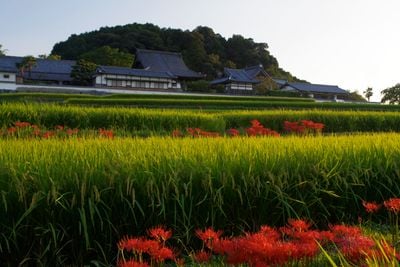
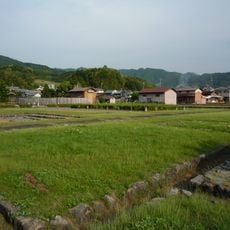
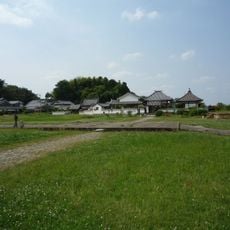
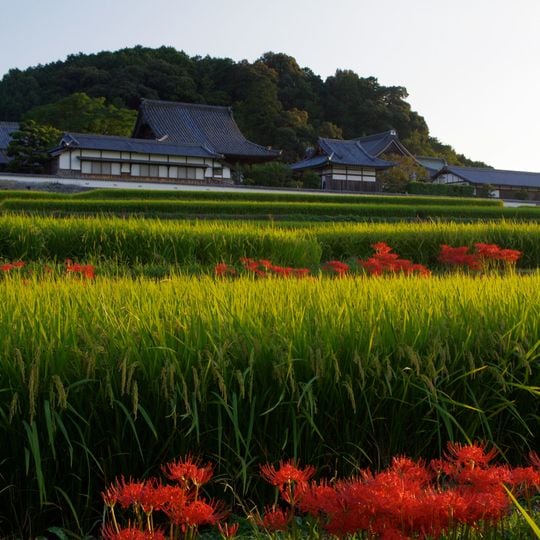
Tachibana-dera is a Buddhist temple in Asuka, Japan, with several wooden buildings and a tidy courtyard. The central grounds hold three ancient stone structures that recall a vanished pagoda.
Legend holds that Prince Shōtoku converted his father Emperor Yōmei's palace into a temple in 606, though the founding date is uncertain. The first written record is a fire in the nunnery in 680. Excavated roof tiles date from the early 7th century, and the original layout aligned gate, pagoda, hall and lecture hall east to west. In 1506 armed monks burned the temple, which never recovered its former scale.
The name comes from a legend that Tajimamori, sent by Emperor Suinin to fetch the fruit of immortality from Tokoyo no kuni, planted a tachibana sapling at this spot. The temple is the 10th stop on the New Saigoku 33 Kannon pilgrimage, and its Kannon hall holds a Nyoirin Kannon statue.
The temple opens daily between 9 and 17, and sits in a quiet section of Asuka. A short walk from the bicycle path leads through an entrance gate into the courtyard.
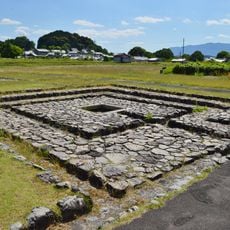
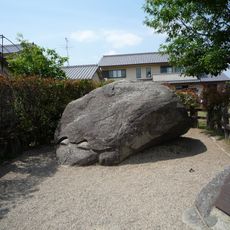
The Nimen-seki, a roughly one-metre Asuka-period stone image, is carved with a good face and an evil face, said to show the two sides of the human heart. The five-storey pagoda that once stood here was struck by lightning in 1148; only its central foundation stone remains, with a rare round shaft hole flanked by three pilasters.
The community of curious travelers
AroundUs brings together thousands of curated places, local tips, and hidden gems, enriched daily by 94,817 contributors worldwide.