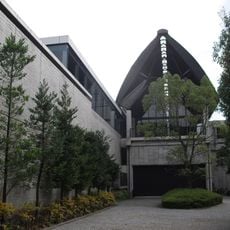
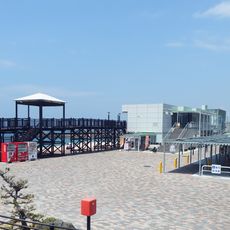
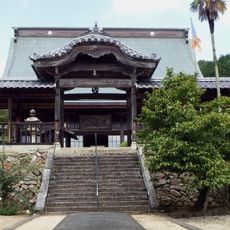
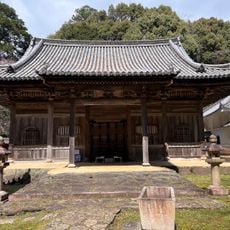
Eitoku-ji, Buddhist temple in Ōzu, Japan.
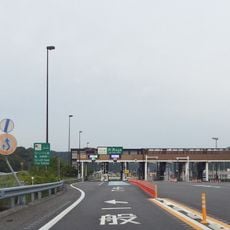
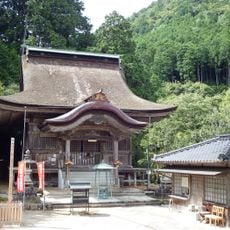
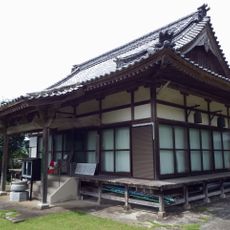
Eitoku-ji is a Shingon Omuro-ha temple in Ōzu with two sites about 1.5 km apart: the main precinct in the hills south of the Toyogahashi bridge, and the detached Toyogahashi grounds near the Ōzu interchange of the Matsuyama Expressway. The main hall was rebuilt in 2004; the Toyogahashi hall, finished on 12 May 2024, holds a newly made life-size seated Maitreya statue, with the original image kept in an inner room.
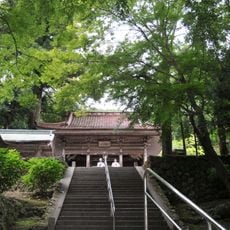
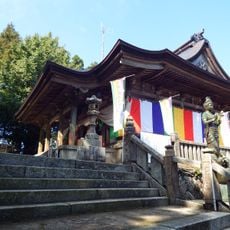
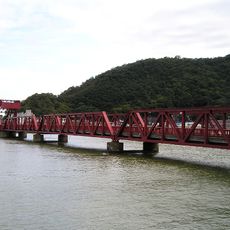
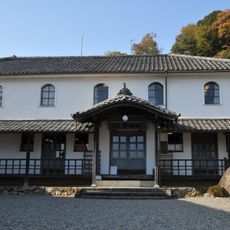
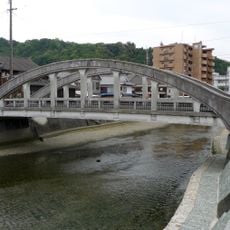
Eitoku-ji's main hall (honbō) was founded in the early Muromachi period, during the Eitoku era (1381–1384), which gave the temple its name. A fire destroyed its records, leaving only oral tradition. It was rebuilt in 1727 by Shūi, and the main hall, built in 1846, was reconstructed in 2004. The detached precinct at Tōyogahashi, 1.5 km south, centers on the bridge where Kūkai is said to have spent a night.
The name Eitoku-ji comes from the Eitoku era (1381–1384), when the main monastery was founded. At the detached Toyogahashi site, a memorial service for Setsubun is held on 3 February and a cucumber blessing on the day of the ox in midsummer. Pilgrims on the Shikoku circuit avoid tapping their walking sticks on any bridge so that Kukai can sleep.
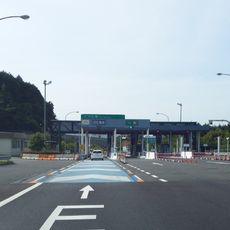
Eitoku-ji has two sites: the main hall (honbō) stands in the hills about 1.5 km south of the Tōyagahashi bridge, its detached precinct. The bridge site lies near the junction of the Matsuyama Expressway Ōzu Interchange and National Route 56, close to the Ōzu IC exit from Matsuyama and the Ōzu-kita IC from Uwajima. A tsuyadō built in 2025 sleeps up to three.
Under the bridge lies a reclining stone statue of Kūkai, and the spot is the only place in Japan where sleeping overnight is permitted as ascetic practice; the Ten'yagabashi office lends out straw mats. Pilgrims also avoid tapping their staffs on any bridge so Kūkai can sleep.
The community of curious travelers
AroundUs brings together thousands of curated places, local tips, and hidden gems, enriched daily by 94,065 contributors worldwide.