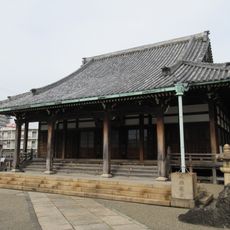
Kaizen-in, Buddhist temple in Wakayama, Japan
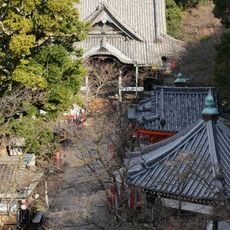
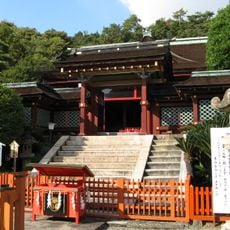
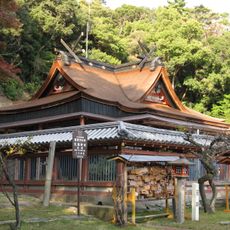
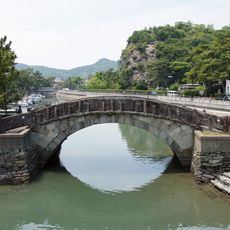
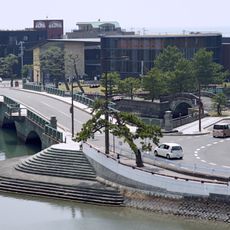
Kaizen-in is a Nichiren Buddhist temple on the small island of Meseyama in Wakaura, Wakayama. Its grounds now cover only about 330 square metres around a two-storey tahōtō pagoda roughly 13 metres high, rebuilt in 1653. The island is reached by the Sanzanbashi, a stone bridge with a high railing, and a stone stairway leads up to the pagoda.
In 1649 Yōju-in, mother of Tokugawa Yorinobu, placed sutra stones inscribed with the Lotus Sutra title in a stone chamber on Mount Meseyama and built a small hall over it. In 1653 Yorinobu rebuilt the hall as a two-storey tahōtō pagoda. After the Meiji Restoration the temple lost its patronage and only the pagoda remained; it became a branch temple of Hōon-ji.
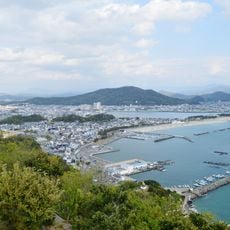
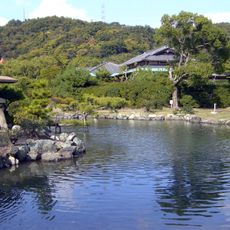
Kaizen-in belongs to the Nichiren sect, not Shingon. Its name is tied to the sea: the temple stands on the small island of Meseyama at the mouth of the Waka River, once counted alongside Enoshima, Chikubushima and Miyajima as a waterside scenic spot. The Kishū Tokugawa family long patronised it, and the temple's grounds once covered the whole island.
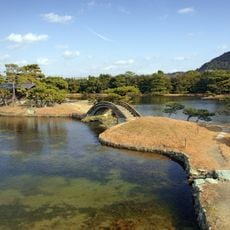
Kaizen-in stands on the small island of Meseyama at the mouth of the Waka River, reached by the Sanzembashi, the oldest stone bridge in Wakayama Prefecture. The temple grounds now cover only about 330 square metres around the pagoda. The island and bridge are a prefectural scenic and historic site within Wakanoura; the pagoda was dismantled and repaired from 1994 to 1996.
The stone chamber beneath the pagoda holds over 150,000 sutra stones, each inscribed with the Lotus Sutra title. A 2004 survey confirmed their number; an inscription on a stone box shows the project was intended to memorialize not only Ieyasu but also the many Japanese who died in battle.
The community of curious travelers
AroundUs brings together thousands of curated places, local tips, and hidden gems, enriched daily by 94,453 contributors worldwide.