Takisan Temple, Buddhist temple in Okazaki, Japan
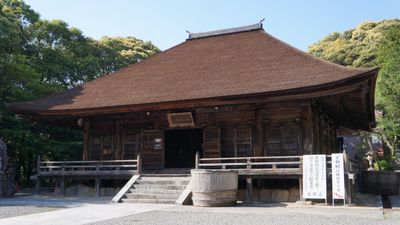
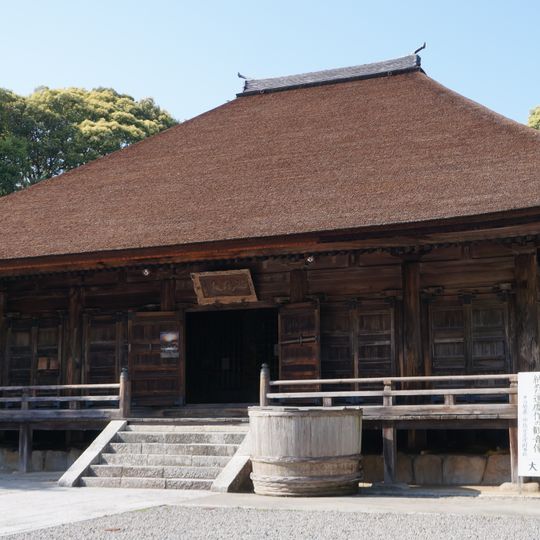
Takisan Temple is a Tendai Buddhist temple in Okazaki whose main hall (hondō) is a 14th-century Important Cultural Property: a 5-by-5-bay building with a hip-and-gable roof of cypress bark, its outer worship area separated from the inner sanctuary by a lattice screen. A low wooden railing runs across the weathered dark-timber facade, where a faded plaque hangs above the central doorway; short stone steps lead up to the entrance, and a large wooden barrel sits to the right of the steps.
According to the temple's origin narrative, the monk Eigu revived a ruined Nara-period temple in the 1120s, and in 1151 Fujiwara no Noritada built the main hall. The Kamakura shogunate patronized the temple, and the current main hall dates stylistically to the late 14th century. In 1646, Tokugawa Iemitsu ordered the construction of Takisan Tōshō-gū within the grounds.
The Oni Matsuri, held at the temple, is an intangible folk cultural property of Aichi Prefecture. The temple's founding legend ties it to En no Gyoja, who is said to have enshrined a golden Yakushi Nyorai statue found in the Aoki River. The temple's name, Takisan-ji, comes from its mountain name, Kissho Darani-san, and its cloister name, Yakuju O-in.
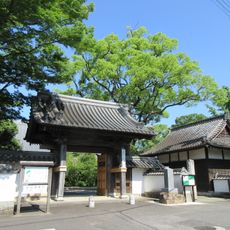
The temple stands in the Takicho district; the three-gate (sanmon) is at the entrance to the village, a short walk from the main hall. The treasure hall holding the Kannon, Bonten and Taishakuten statues is open year-round, and the Meitetsu bus from Higashi-Okazaki Station stops at Takisanji-shita.
The temple's three statues of Kannon, Bonten and Taishakuten are attributed to the workshop of sculptor Unkei; the temple record says they were made for the third anniversary of Minamoto no Yoritomo's death in 1201. X-ray imaging found what appear to be human teeth fixed inside the Kannon statue's mouth.
The community of curious travelers
AroundUs brings together thousands of curated places, local tips, and hidden gems, enriched daily by 94,406 contributors worldwide.