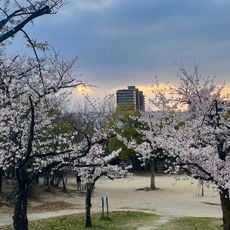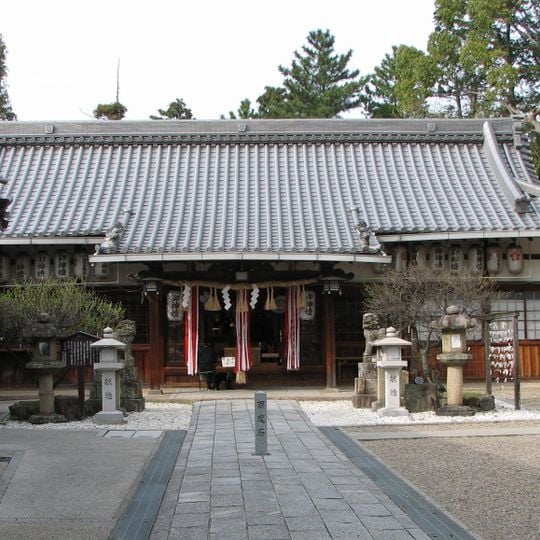
Katano Shrine, Shinto shrine in Osaka Prefecture, Japan
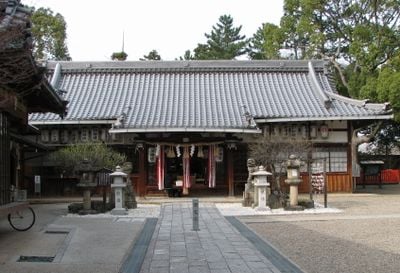
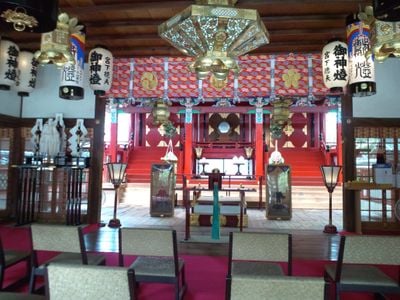
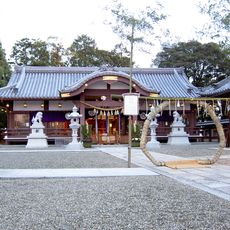
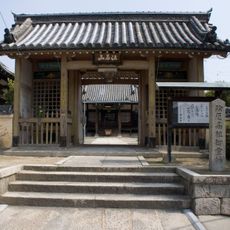
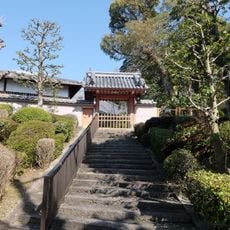
Katano Shrine is a Shinto shrine in Hirakata, Osaka Prefecture, whose main hall (honden) and worship hall (haiden) were rebuilt in 1602 under Toyotomi Hideyori, with Katagiri Katsumoto as magistrate. The honden is a three-bay nagare-zukuri structure with cypress-bark roofing and is an Important Cultural Property. The precinct also holds a Kamakura-period stone lantern and the East and South Gates, the latter called the Red Gate.
According to shrine tradition, it began when Nomi no Sukune, a Izumo strongman who won a sumo bout against Taima no Kehaya, received this land as a reward and enshrined Susanoo. In 960 Sugawara no Michizane was added as a deity. Toyotomi Hideyoshi had it restored in 1583 as guardian of Osaka Castle's northeast, and Toyotomi Hideyori rebuilt the main hall in 1602 under Katagiri Katsumoto.
The shrine's name comes from Katano, the old district name that also gave Katano city its name. Since a 1583 rebuilding by Hashiba Hideyoshi, the shrine has been revered as guardian of the demon gate of Osaka Castle, and the oni is treated as its symbol: ema plaques and goshuin stamps bear a demon mask, and at Setsubun the bean-throwing calls out "Oni wa uchi" (demons inside) instead of driving them out.
The shrine is accessible on foot from Hirakata and has level pathways that are easy for most visitors to navigate. Entry is straightforward through the main gates, and opening hours information is posted on site or available from local tourist offices.
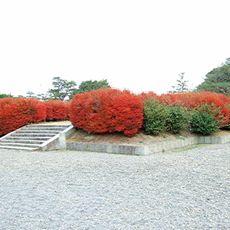
In the grounds' grove stands the stone marker of Kushusumi Shrine, an Engishiki-listed shrine absorbed in 1909; its former site in Makino-Honmachi is now housing. North of the precinct, in Makino Park, a mound is called the tomb of Aterui, the Emishi leader executed in 802, and the shrine sells a friendship charm named after him.
The community of curious travelers
AroundUs brings together thousands of curated places, local tips, and hidden gems, enriched daily by 93,452 contributors worldwide.