Kudara-ji, Special Historic Site in Hirakata, Osaka Prefecture, Japan
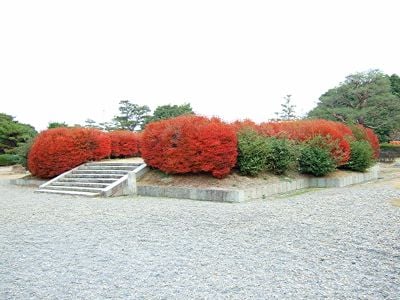
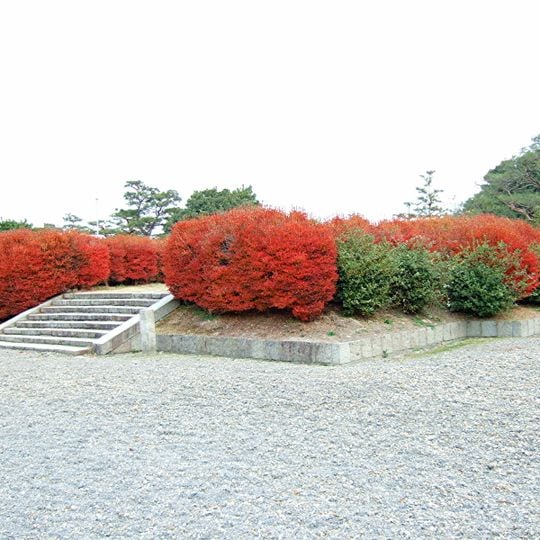
Kudara-ji is a former Buddhist temple site in Hirakata, Osaka Prefecture, with reconstructed stone foundations and a low stepped stone retaining wall topped by orange-red shrubs. The layout had a Main Hall and Lecture Hall in the centre, pagodas east and west, and a cloister linking the Middle Gate to the Main Hall. The grounds are maintained as an archaeological park.
Kudara-ji was founded around 750 by Kudara no Konikishi Kyōfuku, great-grandson of Zenkō, a son of the last king of Baekje who settled in Japan. Kyōfuku had donated gold found in Mutsu Province for the Great Buddha of Tōdai-ji. The temple burned down around the 11th–12th centuries and was never rebuilt.
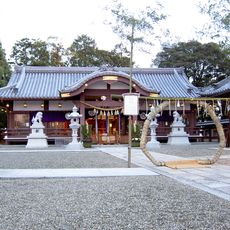
The temple's name comes from Baekje, the Korean kingdom whose royal descendant Zenkō settled in Japan and received the family name Kudara no Konikishi. His great-grandson Kyōfuku founded the temple around 750. The adjacent Kudaraō Shrine honours this clan, and the site is one of the Hirakata Eight Views, known as 'Matsukaze of Kudara-ji Ruins'.
The site is accessible by public transportation with a short walk from the nearest station. Visitors should wear appropriate footwear and allow time to explore the excavated foundations.
The third excavation, begun in 2005, found fragments of a large bas-relief Buddha image, the first of its kind dated to the Nara period. The pieces point to the high status of the temple and the power of the Kudara no Konikishi clan.
The community of curious travelers
AroundUs brings together thousands of curated places, local tips, and hidden gems, enriched daily by 94,658 contributors worldwide.