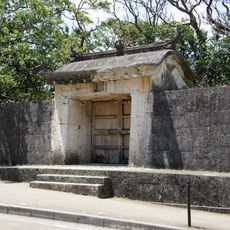
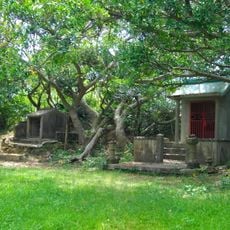
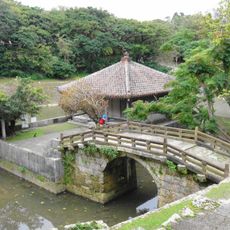
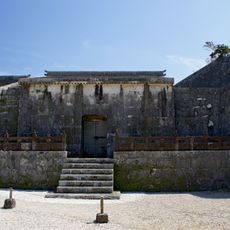
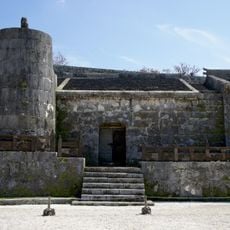
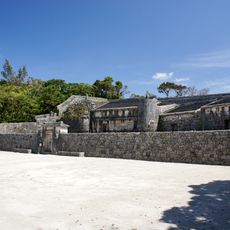
Tamaudun epitaph, epitaph at Tamaudun in Naha, Japan
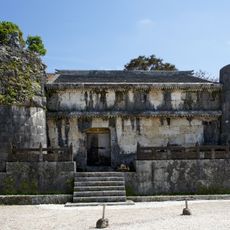
The Tamaudun epitaph is a stone stele in the outer courtyard of the Tamaudun royal mausoleum in Naha, Okinawa. Erected in 1501, it bears a text in kana listing the nine categories of people eligible for burial in the tomb. It is the second-oldest surviving stone inscription in kana in Okinawa.
The stele was erected on an auspicious day in the ninth month of 1501, during the reign of King Sho Shin, and is the second-oldest extant stone monument in Okinawa written in kana. Its text lists the nine categories of people entitled to burial in Tamaudun. Historians read it as aimed at excluding Sho Shin's eldest son, Urasoe Chokuman, who had been disinherited; after Sho Shin's death, King Sho Sei had Chokuman reburied in the mausoleum anyway.
The epitaph lists nine categories of people entitled to burial in Tamaudun, written in kana. Scholars read its real purpose as excluding Sho Iheki (Urasoe Aji Choman), Sho Shin's eldest son and former heir, who had been disinherited; it is said to reflect the wishes of Sho Shin's mother, Yosei Udun. After Sho Shin, King Sho Sei had Choman reburied in Tamaudun despite the text.
The inscription is located in a protected area that is easily accessible from the main mausoleum building and can be viewed during regular visiting hours. The site is well signposted so visitors can easily find this location.
The epitaph lists nine categories of people eligible for burial in Tamaudun, but its real aim was to exclude Crown Prince Sho Ihe, known as Urasoe Aji Choman. Choman was Sho Shin's eldest son and heir before being disinherited, and the text is said to reflect the wishes of Sho Shin's mother, Shoei Goton. After Sho Shin's death, King Sho Sei had Choman reburied in Tamaudun anyway, against the inscription's wording.
The community of curious travelers
AroundUs brings together thousands of curated places, local tips, and hidden gems, enriched daily by 93,581 contributors worldwide.