Sueyoshi-gū, Shinto shrine in Sueyoshi Park, Japan
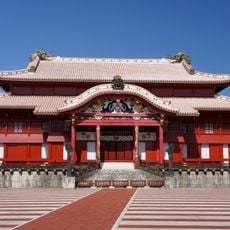
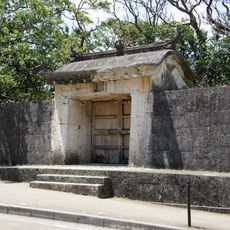
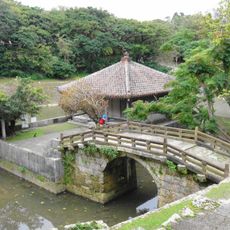
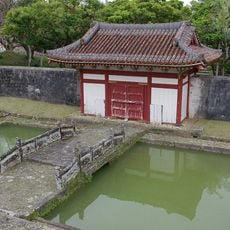
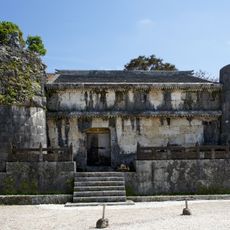
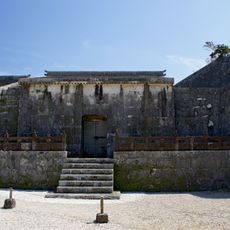
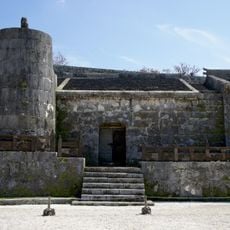
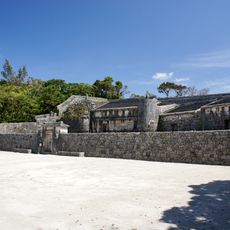
Sueyoshi-gū is a Shinto shrine featuring a wooden main hall with a traditional thatched roof and stone-paved pathways leading across the landscape. The structure sits nestled among greenery, blending classical Japanese architecture with its natural surroundings.
According to the Ryūkyū Shintō-ki (1648), the monk Tsuruo, abbot of Tenkai-ji, vowed in Japan to visit Kumano; King Shō Taikyū refused him leave, so Kumano Gongen appeared in a dream and sent him to a northern peak where an echo answered and a demon mask was found. The king, who had dreamt likewise, ordered a great shrine built there during the Kanshō era (1450–1457). In 1936 the main hall was designated a National Treasure, and it was destroyed in the Battle of Okinawa in 1945.
Sueyoshi-gū is one of the Ryukyu Eight Shrines, a group of official shrines supported by the Ryukyu royal court, which supplied the shrine's priests and paid for repairs. Its priests included a hafuri, a naishi and miyawarabe, and the court's temple office provided the robes they wore for kagura dances. The shrine's founding legend tells of the monk Tsuruo, who vowed in Japan to visit Kumano and later, guided by a dream, found a demon mask at this rocky site.
The shrine is located about six minutes from Shiritsu Byoin-mae monorail station and remains open to visitors daily with no admission charge. Parking is available on site, making it easy to plan your visit.
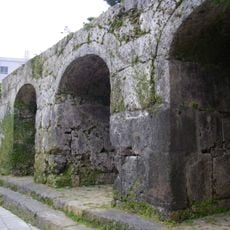
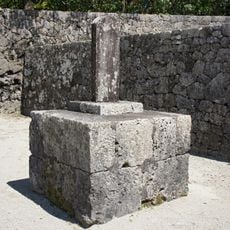
The shrine's main hall was rebuilt in 1972 using the foundation stones and two pillars that survived the 1945 Battle of Okinawa; a rainbow beam (kōryō) also remained. The site was designated a national treasure in 1936, before the war, and is now an Okinawa Prefectural Historic Site.
The community of curious travelers
AroundUs brings together thousands of curated places, local tips, and hidden gems, enriched daily by 94,832 contributors worldwide.