Kaichū Inari Shrine, Inari shrine in Shinjuku, Tokyo, Japan
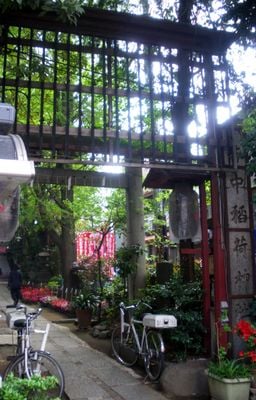
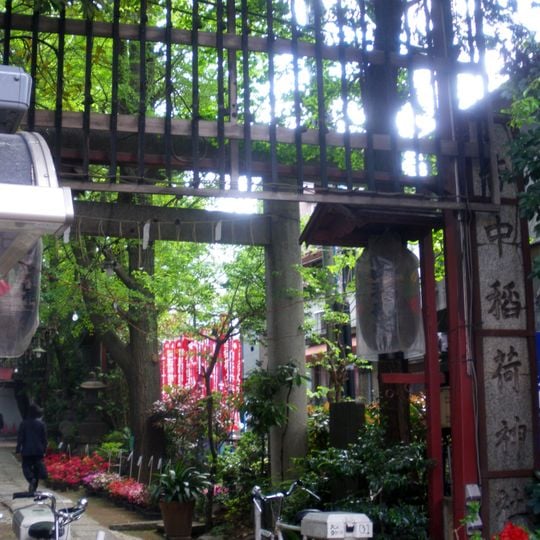
Kaichū Inari-jinja is a small Inari shrine in Hyakunin-chō, Shinjuku, about 100 m west of JR Shin-Ōkubo Station. A tall stone pillar at the right bears the name 中稲荷神社 in vertical black characters; to its left a red-painted wooden frame with a gabled roof shelters a large pale-grey lantern with dark markings. Above runs a dark wooden lattice beam, and farther left a round stone pillar holds a beam hung with white paper streamers.
Founded in 1533, late in the Muromachi period, the shrine began when Inari no Ōkami was enshrined as tutelary deity of Ōkubo. In the Edo period the Tokugawa shogunate stationed its hundred-man musketeer corps here, giving the district its name Hyakunin-chō. The main hall burned in an air raid in 1945 and was rebuilt in 1960 with timber granted by Ise Jingū.
The shrine is known for bringing benefit in gambling, and its name Kaichū ("all hit") comes from a legend: an Edo-period gunnery officer dreamed of the Inari deity, then hit the target every time in shooting practice. Today the annual festival features a procession of the Hyakunin-tai matchlock corps, registered as a Shinjuku intangible folk cultural property in 2002.
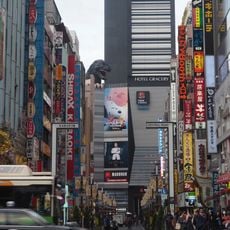
The shrine is accessible from the street but sits in a narrow alley that is easy to overlook. Visitors should walk slowly through the Shinjuku streets and watch for the red torii gate to spot the modest entrance.
The name Kaichū means "hitting the mark every time": a shooter of the Tokugawa shogunate's hundred-man musketeer unit, unable to improve his aim, dreamed of the Inari deity, practised, and then hit the target with every shot. The shrine's annual procession of that musketeer unit was registered as a Shinjuku intangible folk cultural property in 2002.
The community of curious travelers
AroundUs brings together thousands of curated places, local tips, and hidden gems, enriched daily by 94,092 contributors worldwide.