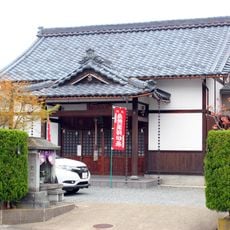
Fukui Daibutsu, Daibutsu in Fukui, Japan
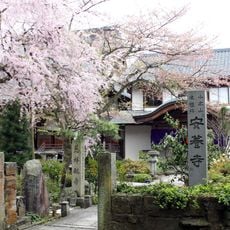
The Fukui Daibutsu is a gilt-bronze seated figure of the bodhisattva Kannon, about 7 metres tall and roughly 8 metres with its pedestal, kept at Nishiyama Kōshō-ji in the Hanatsuki district of Fukui city. The temple belongs to the Tendai school, and the statue stands in the main hall.
The stone Daibutsu was founded in the Sengoku period by the Asakura clan at Ichijōdani. In 1606 it moved with Kōshōji to Fukui, and in 1691 both settled at the present site. Damaged by the 1945 air raid and the 1948 earthquake, it was rebuilt in 1958 as the present bronze statue.
The statue is a gilt-bronze Shō Kannon Bosatsu, about 7 metres tall and roughly 8 metres with its pedestal. Inside it is said to rest a sandalwood Kannon image attributed to Kūkai, over a thousand years old, which survived the burning of the temple grounds when the Asakura clan fell and later fires, the 1945 air raid and the 1948 earthquake.
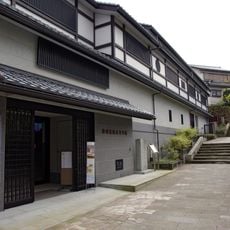
The Fukui Daibutsu stands at Nishiyama Kōshō-ji in the Hanatsuki district of Fukui city, at 1-1-26 Hanatsuki, roughly 80 metres north of the temple's former site. The grounds are compact, so the statue, its hall and the kuri can be seen in a short visit; allow time to look at the statue's pedestal, which brings the total height to about 8 metres.
The statue's original stone version stood about 80 metres south of the present site, in the grounds of the Tendai temple Kōshōji, and was called the Stone Daibutsu. It was damaged in the July 1945 Fukui air raid and the June 1948 Fukui earthquake, and the bronze statue was rebuilt in 1958 when the temple moved.
The community of curious travelers
AroundUs brings together thousands of curated places, local tips, and hidden gems, enriched daily by 93,464 contributors worldwide.