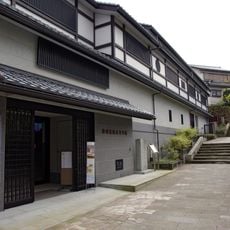
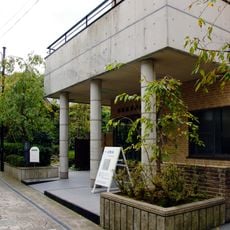
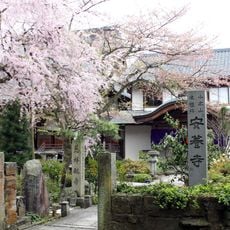
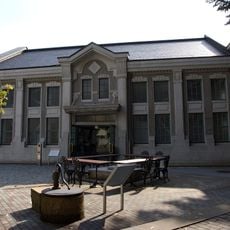
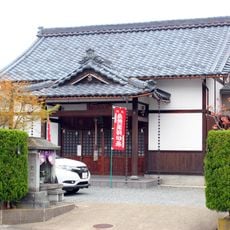
Kōshū-ji, Jōdo Shinshū temple in Fukui, Japan
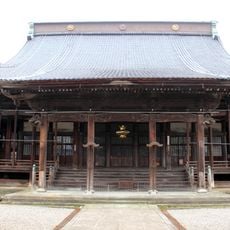
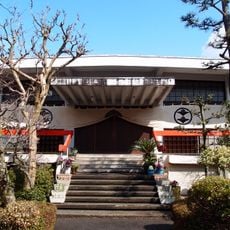
Kōshū-ji is a Jōdo Shinshō Honganji-ha temple of the mountain name Gyūbizan, now at 3-11-19 Matsumoto, Fukui. Its founder Gyōnyo opened a dōjō near present-day Tashima, Sakai, around 1290, and the temple name appears in records before or shortly after 1311, when Kakunyo stayed over twenty days. The present site dates from after the war and the 1948 Fukui earthquake destroyed most buildings; the grounds also hold Shōtoku Kindergarten, founded in 1950.
Founded by Gyonyo, a disciple of Enzen in the Takada lineage, the temple was originally based in Tajima, Echizen (now Sakai, Fukui Prefecture), and likely opened its dōjō around 1290. It became affiliated with the Honganji after Gyonyo received teachings from Kakunyo in 1311. In 1587 it moved to Yanagimachi in Fukui, and after fires in 1659 and 1669 it relocated to the castle town's northern edge. Destroyed by war and the 1948 Fukui earthquake, it was rebuilt at its current site in Matsumoto 3-chōme.
The temple's name appears in records before 1311, when its founder Gyonyo received teaching from Kakunyo, making it one of the earliest named temples of the Honganji line. Its monks trace descent from Hōjō Tokimura, and the abbot's family name remains Hōjō. A statue of Rennyo writing the Ofumi letters stands in the columbarium.
The temple is best visited in early morning or late afternoon when light is softer and crowds are smaller. Wear comfortable shoes as some areas have steps or uneven ground.
The temple keeps the ashes of the painter Iwasa Matabei, who was saved as a child after his father Araki Murashige rebelled against Oda Nobunaga. The 10th abbot, Shingan, recognised his talent and recommended him as a painter to the Fukui domain. When the family grave was moved in 1987, the abbot present found an Echizen-ware jar inscribed "Araki" inside it.
The community of curious travelers
AroundUs brings together thousands of curated places, local tips, and hidden gems, enriched daily by 93,850 contributors worldwide.