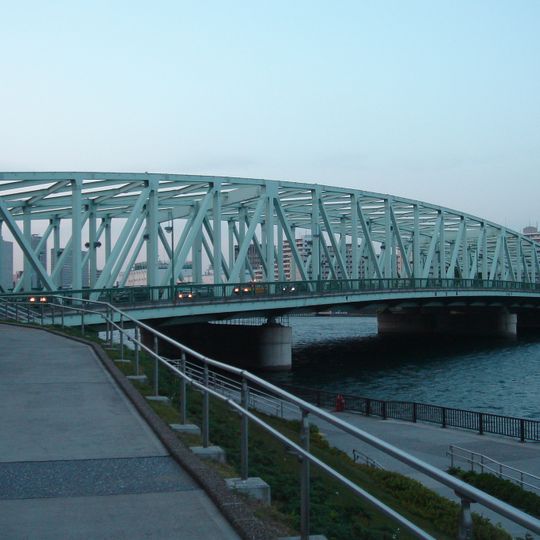
Aioi Bridge, Steel bridge in Koto, Japan
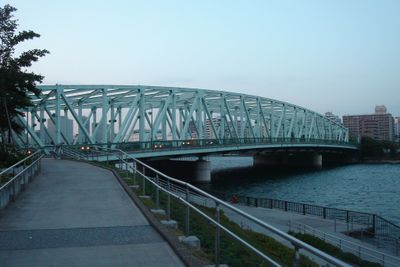
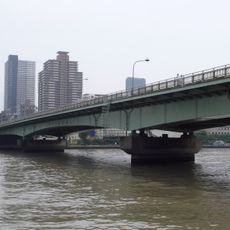
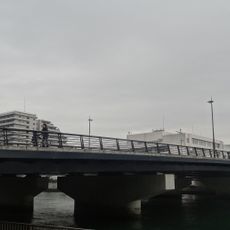
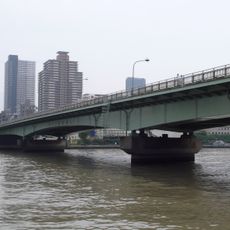
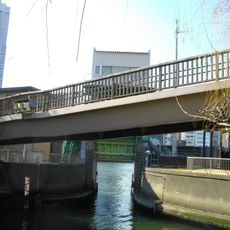
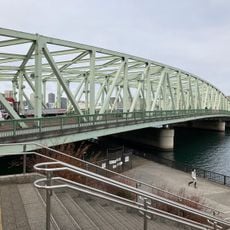
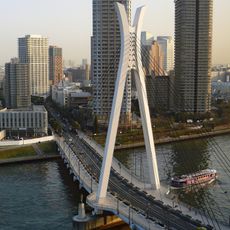
Aioi Bridge spans the Sumida River and links different districts within Koto through its steel framework and concrete deck. The structure carries both cars and pedestrians across the waterway, serving as a major transportation link in the eastern part of Tokyo.
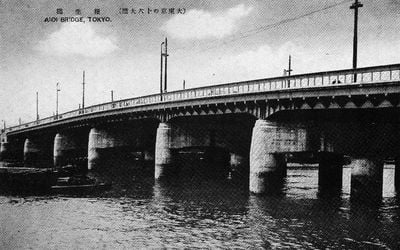
A first wooden Aioi Bridge opened in March 1903 as two spans, a 147.0 m "great bridge" and a 52.7 m "small bridge", across Nakanoshima islet, built for 169,628 yen. Widened to 10.8 m in 1919 for trams, it burned on 1 September 1923 when burning ships drifted downriver in the Great Kanto Earthquake, leaving Tsukishima an island for three years and two months. Rebuilt on 22 November 1926 as the first bridge of the reconstruction works, it was replaced by the present steel truss bridge, begun 1988 and fully open in August 1999.
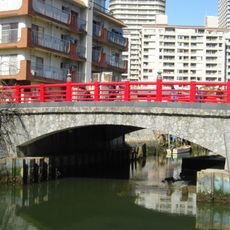
The name Aioi comes from the paired pines of Noh theatre, because the first crossing consisted of two bridges of different lengths. The 1903 wooden Aioi-Ōhashi (147.0 m) and Aioi-Kobashi (52.7 m) spanned the Nakano-shima island mid-river. The singer Hoshino Gen filmed the music video for his single "Shiranai" near the bridge.
The bridge is open year-round for pedestrians and vehicles without restrictions. Crossing is straightforward, and views of the riverbank are clear from both approaches.
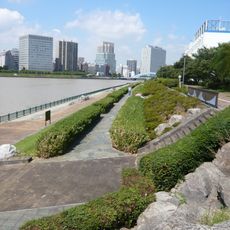
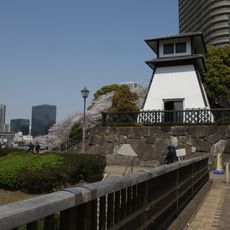
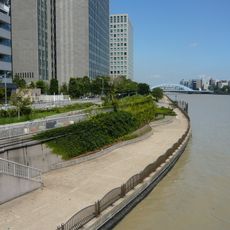
The bridge's name comes from the "Aioi pine", a symbol of paired trees, because it was first built as two spans of different lengths, 147.0 m and 52.7 m, crossing the island of Nakanoshima. The smaller span was buried in 1980, joining Nakanoshima to the land; the Koto Nakanoshima Park, Tokyo's only waterside park on the Sumida, now lies beneath the bridge.
The community of curious travelers
AroundUs brings together thousands of curated places, local tips, and hidden gems, enriched daily by 94,781 contributors worldwide.