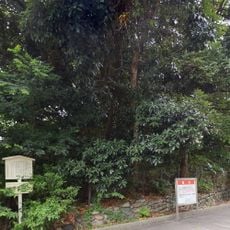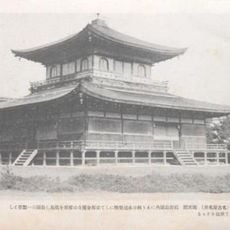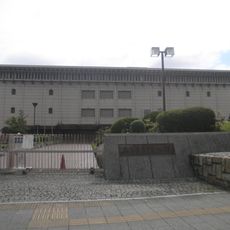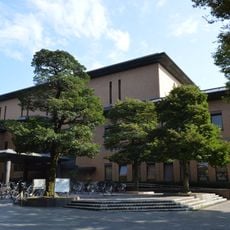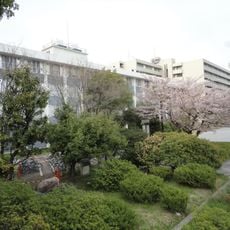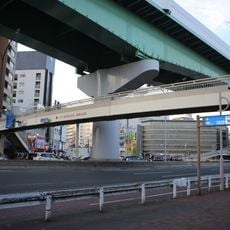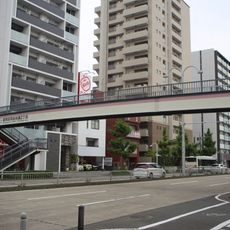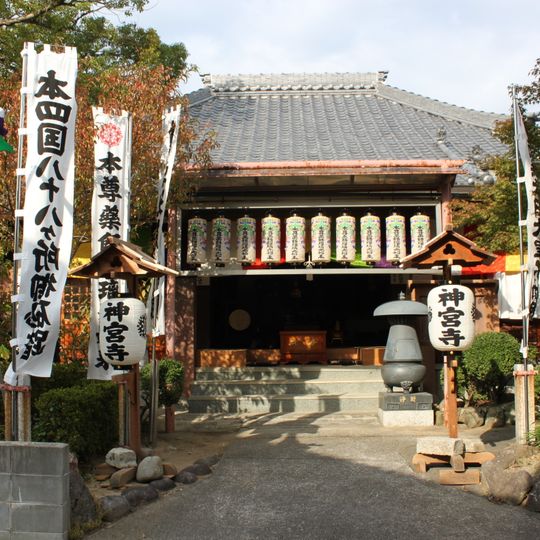
Jingū-ji, Buddhist temple in Gokiso 4-chōme, Nagoya, Japan.
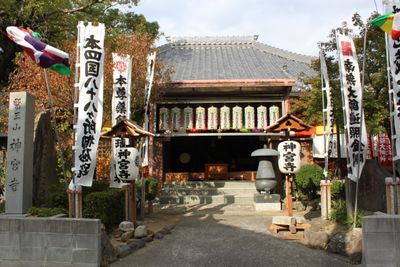
Jingū-ji is a Shingon-shū Buzan-ha temple at Gokiso 4-chōme in Shōwa-ku, Nagoya, formally named Iō-zan Jingū-ji. Its main hall, rebuilt in 1971 after wartime fire, houses the honzon Yakushi Nyorai; the Kannon hall was completed in 1986. The grounds also hold a Jizō hall, a Ji'en hall, an Inari shrine and a tree-burial ossuary.
Founded by the monk Jōe in 850 as a protective ritual site for Atsuta Shrine, Jingū-ji was planned under Emperor Saga and completed under Emperor Ninmyō. After a lightning fire in 1304 it moved to Gokiso, where its main hall was rebuilt in 1652 by the carpenter Ōshima Kumohachi. The Meiji separation of Shinto and Buddhism ended its role at Gokiso Hachimangū; the temple was revived in 1887 by the nun Kuwabara Jitsujō, and its halls burned in 1945, with the main hall rebuilt in 1971.
The temple's name comes from its former role as the shrine temple of Gokiso Hachimangū, from which it was separated by the Meiji-era shinbutsu bunri. Each 8 November the hidden Yakushi Nyorai is unveiled, and rice cakes shaped like the medicine jar (yakkō-mochi) are offered; eating them is believed to prevent illness. In recent years a first-birthday ritual has children carry a 1-shō rice cake seven steps for a healthy life.
The temple is open to visitors and you can walk through the grounds freely to explore the gardens and buildings. It helps to be quiet and respect any prayers or ceremonies taking place when you arrive.
The hibutsu Yakushi Nyorai is shown only on 8 November, when the temple holds a Yakushi goma prayer at 10 a.m. and a ceremony at 2 p.m. The same day brings the isshō-mochi prayer, in which a one-year-old child carries a large rice cake seven steps for health and perseverance.
The community of curious travelers
AroundUs brings together thousands of curated places, local tips, and hidden gems, enriched daily by 93,466 contributors worldwide.