Hachimanyama Kofun, Circular kofun in Shōwa Ward, Nagoya, Japan
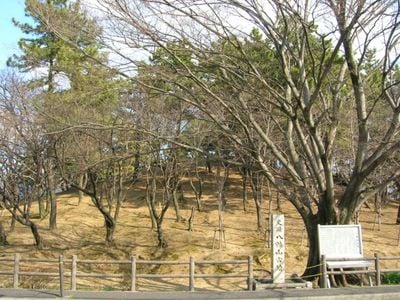
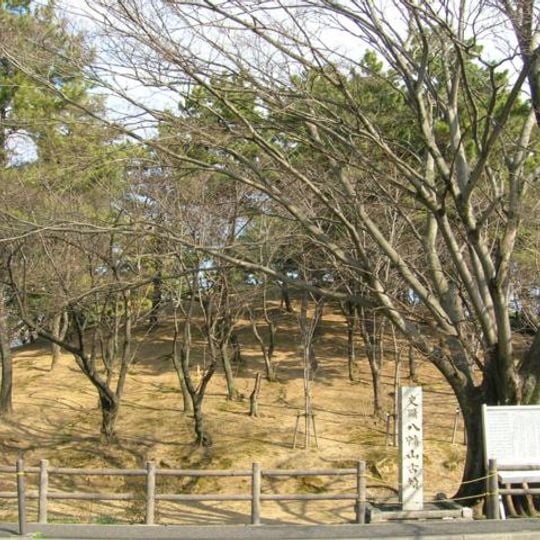
Hachimanyama Kofun is a circular burial mound in Nagoya, 82 meters in diameter and 10 meters high, built in the mid-fifth century. Its summit was flattened during World War II for an anti-aircraft battery, and the mound is now fenced off, with public access to the mound and its filled-in moat prohibited. A stone stele inscribed 史跡八幡山古墳 stands at the base.
Built in the mid-5th century, this is the largest circular kofun in the Tōkai region. It was incorporated into Tsurumai Park in 1919, when it was covered with a grove of pine trees. In 1931 it was designated a National Historic Site. During World War II the Imperial Japanese Army seized the site and flattened the summit for an anti-aircraft battery; after the war the city reshaped and replanted the mound.
The name comes from a small Hachiman shrine whose hokora (inner sanctuary) stood on the summit, which is why the mound is called Hachimanyama. Various Shinto rites were once held here. The shrine is no longer on the mound, and the fenced site cannot be entered.
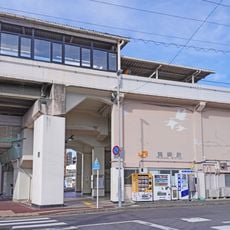
The mound is enclosed by a fence and entry to the tumulus and its moat is prohibited; visitors observe it from the surrounding park paths. It is about an 8-minute walk from Tsurumai Station on the JR Chūō Main Line. A stone stele inscribed 史跡八幡山古墳 stands at the base of the mound.
Terracotta haniwa figures were discovered here before World War II, revealing details about ancient burial customs and art. The Imperial Japanese Army later altered the summit to install a defensive structure, leaving marks on the mound that remain visible today.
The community of curious travelers
AroundUs brings together thousands of curated places, local tips, and hidden gems, enriched daily by 93,469 contributors worldwide.