Anō temple ruins, Buddhist temple ruins in Otsu, Japan
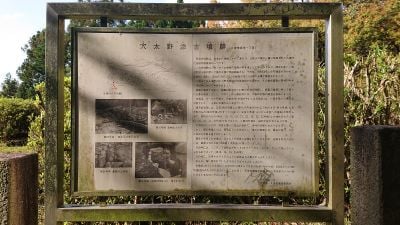
The Anō temple ruins are an archaeological site in Ōtsu where two overlapping temple layouts were excavated: an earlier one with a Kondō west and pagoda east, and a later Hokki-ji-style plan adding a lecture hall to the north. The site was backfilled after the 1984 excavation.
Roof tiles had long been found at Anō, but the temple was identified only in 1973 and excavated on a large scale in 1984. Two overlapping temple layouts emerged: an earlier one with a Kondō west and pagoda east, and a later Hokki-ji-style plan aligned north–south. Inscriptions on tiles read either 630 and 632 or 690 and 692; the temple likely stood into the Heian period, though its name is unknown.
The temple's name is unknown; even its identity as a Buddhist complex was only confirmed in 1973. Excavated roof tiles bear the cyclical signs 庚寅 and 壬辰, read as 630 and 632 or 690 and 692, tying the foundation to the reigns of Emperor Jomei or Empress Jito. Fragments of a silver Buddha image were found at the Lecture Hall site.
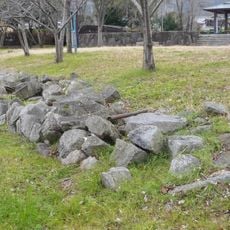
The site lies about a five-minute walk from Anō Station on the Keihan Ishiyama Sakamoto Line. It was backfilled after excavation, so the foundations are not exposed; look for the marked ground rather than standing masonry. The ruins straddle the Anō and Karasaki neighbourhoods, and there is no on-site facility.
The site was backfilled after the 1984 excavation, so no foundations are visible today; the two overlapping temple layouts were detected only through excavation. Fragments of a silver Buddha image were recovered from the Lecture Hall area.
The community of curious travelers
AroundUs brings together thousands of curated places, local tips, and hidden gems, enriched daily by 93,911 contributors worldwide.