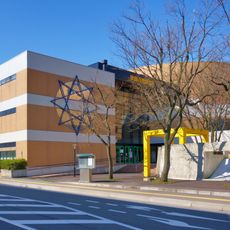
Akitaken-Gokoku-jinja, Shinto shrine in Japan
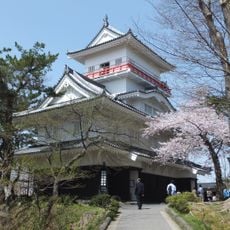
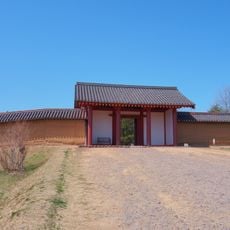
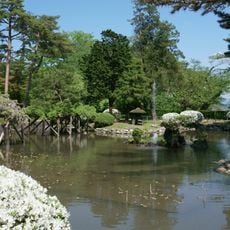
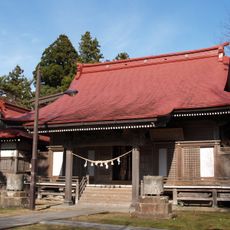
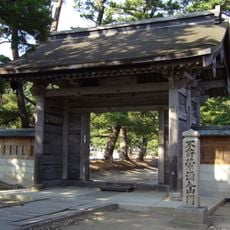
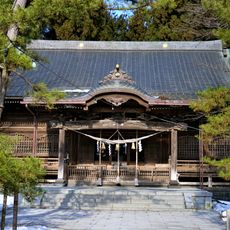
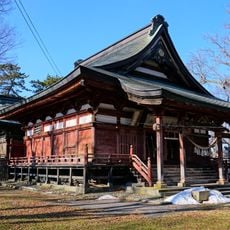
Akitaken-Gokoku-jinja is a Shinto shrine in Akita dedicated to honoring those who died in service. The site features the traditional architectural elements and layout common to Japanese shrines of this type.
In 1869 Akita domain lord Satake Yoshitaka enshrined 425 government soldiers killed in the Boshin War on Takashimizu hill. The shrine burned in 1893, was rebuilt in 1899 at Senshū Park as Akita Shōkonsha, and in 1939 became a Home Ministry-designated Gokoku shrine under its present name. It moved in 1940 to the former Akita Castle site, where it stands today.
The shrine's name changed to Takashimizu-gū after World War II to avoid abolition as a militarist facility, and Izanagi-no-Mikoto and Izanami-no-Mikoto were then enshrined as its main deities. Two annual festivals are held, on 29 April and 24 October. The shrine is known for cherry blossoms, which usually reach full bloom around the spring festival.
The nearest station is Tsuchizaki; buses of Akita Chuo Kotsu also stop at Gokoku-jinja Iriguchi and Gokoku-jinja Urasando, reachable from Akita Station on the Shogunno and Terauchi-route Tsuchizaki lines. A car park is available. The grounds are known for cherry blossoms, which usually reach full bloom around the spring festival on 29 April.
The shrine's name directly expresses its role as a memorial site, a naming convention that persists today. This clarity in naming is characteristic of many Japanese memorial shrines throughout the country.
The community of curious travelers
AroundUs brings together thousands of curated places, local tips, and hidden gems, enriched daily by 94,371 contributors worldwide.