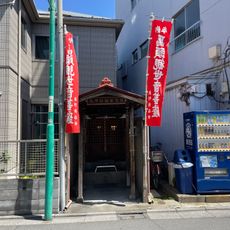
Yanagihara Inari-jinja, Shinto shrine in Japan
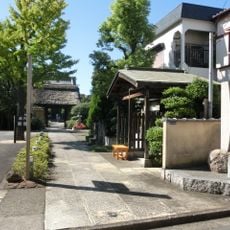
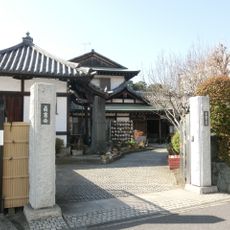
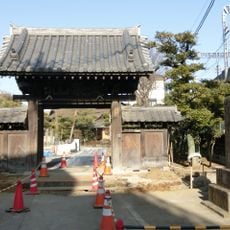
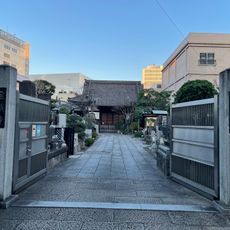
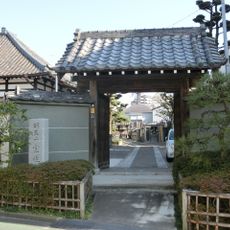
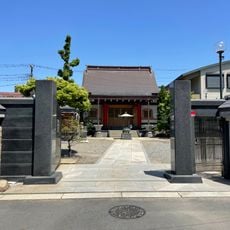
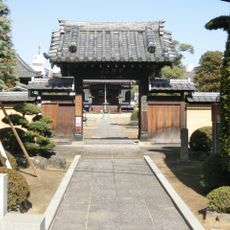
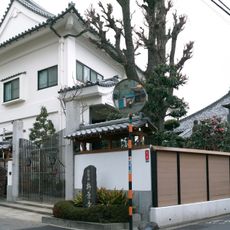
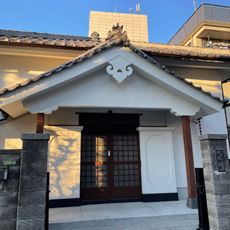
Yanagihara Inari-jinja is a small shrine in the town of Yanagihara featuring the traditional East Asian hip-and-gable roof style, reached through a tree-lined path that offers natural shade. The site consists of a main hall for offerings, a few smaller structures, and is surrounded by greenery that separates it from the busier parts of town.
Founded in 1599 according to the Kesai-shi, the shrine was built by Tokugawa Ieyasu as a protection against the demon gate of Edo Castle, which is why its hall still faces northeast. A flood washed it away in 1786 and the priest Yukaku rebuilt it in 1794; the second torii bears the date 1796.
The shrine's name comes from its location in Yanagihara, and its deity is Ukanomitama, the god of grain. The auxiliary Takagi Shrine, renamed from Dairoku Shrine in the early Meiji period, enshrines Takamusubi, Ōyamakui and Tokugawa Ieyasu. The Yanagihara Minowa Hayashi-ren, a local festival music group, is registered as an intangible folk cultural property of Adachi.
The shrine is a 10-minute walk from Kitasenju Station, 9 minutes from Ushida Station and 9 minutes from Keisei Sekiya Station. The main hall faces northeast, the direction of the Edo Castle demon gate, so approach from the front path to face it directly. The Fujizuka mound is registered as a Tangible Folk Cultural Property of Adachi Ward.
The second torii gate in front of the main hall bears the date 1796, and the chōzuya water basin is inscribed with the year 1830 and the name of a nearby teahouse, showing that the teahouse paid for it. The Fujizuka mound, built in 1933 with stone and volcanic earth from Mount Fuji, is registered as a Tangible Folk Cultural Property of Adachi Ward.
The community of curious travelers
AroundUs brings together thousands of curated places, local tips, and hidden gems, enriched daily by 95,134 contributors worldwide.