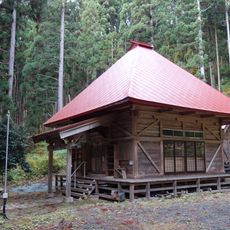
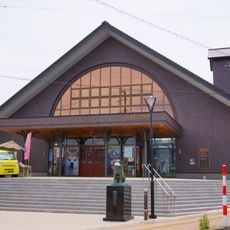
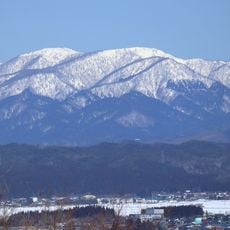
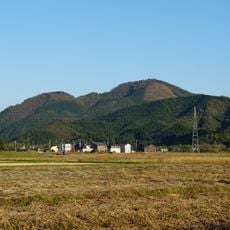
Kurumidate Site, Archaeological site in Kitaakita, Japan.
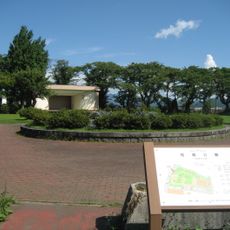
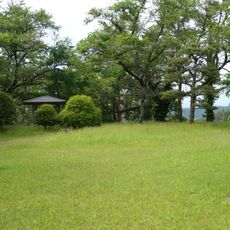
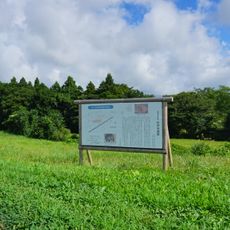
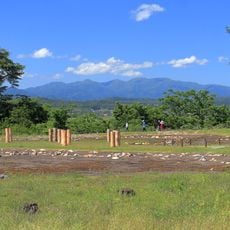
Kurumidate Site is a 9th- to early 10th-century government office or temple complex in Kitaakita, Akita Prefecture. Excavations found four buildings, fences and rows of post holes; two central buildings used board-log construction (itakura), with 30 cm square cedar posts and 5 cm thick boards. The lower halves of the buildings remain buried as they stood, while the upper parts were washed away by a flood.
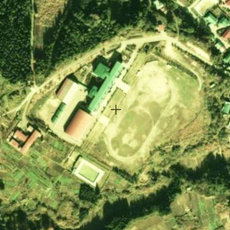
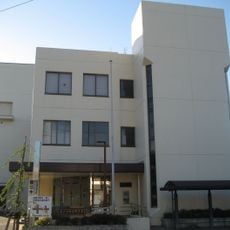
The site dates to the late 9th to early 10th century, when it was a government office or temple complex. It was buried by a lahar from the 915 eruption of Towada volcano. The first finds came in 1961 during schoolyard work, and excavations from 1967 revealed four buildings, fences and post rows.
The site's name, Kurumidate, is preserved in local memory, and the 915 Towada eruption that buried it left no written record; the event survived as the Sanzu legend of Hachirotaro. Excavated wooden tablets list names such as Tamatsukuri Mamaro with rice rations of three go, tying the site to the Engi disturbances of 878-879.
The site is reachable by car, taking around 30 minutes from the nearest major town. It is best visited in good weather and with appropriate footwear, as the grounds can be uneven.
The 915 eruption of Towada volcano left no written record, yet the disaster survived as the Sanzu legend of Hachirotaro, passed down orally. Excavated wooden tablets name men such as Tamatsukuri Mamaro, a surname of Emishi who sided with the government during the Gangyo War of 878-879.
The community of curious travelers
AroundUs brings together thousands of curated places, local tips, and hidden gems, enriched daily by 94,770 contributors worldwide.