Fujimoto Kannonyama Kofun, Ancient burial mound in Ashikaga, Japan
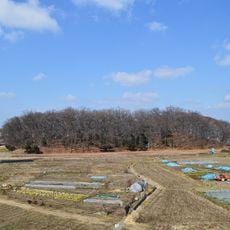
Fujimoto Kannonyama Kofun is a zenpō-kōhō-fun (two conjoined rectangles) mound in Fujimoto, Ashikaga, with a 117.8 m mound length and about 210 m including its surrounding moat. The two-tier front section stands 5.4 m high; the three-tier rear section rises 11.8 m, its third tier faced with fukiishi stones. A double-rimmed clay pot was placed on the summit.
Built in the mid-4th century, the mound is a zenpō-kōhō-fun (two conjoined rectangles), not a keyhole shape. Its date rests on a pumice layer from a 4th-century eruption of Mount Asama found in the topsoil beneath it. It was designated a city historic site in 1964 and a National Historic Site in 2006, the fourth in Ashikaga after the Ashikaga School site, the Ashikaga residence (Bannaji) and Kabasaki-dera.
The burial site reflects how people of wealth and status were laid to rest during the Kofun period and where they fit in society. The layered design shows the differences in social rank that existed at that time.
The ancient burial mound sits on rice fields and is accessible on foot, though it has no modern facilities or information signs on site. Visit on clear days since it is an open area with no shelter from the weather.
The burial mound has never been excavated and remains in its original state. This makes it especially valuable for future archaeological research since the burial chamber may still be untouched.
The community of curious travelers
AroundUs brings together thousands of curated places, local tips, and hidden gems, enriched daily by 94,316 contributors worldwide.