Kegon-ji Temple, Buddhist temple in Nishikyo-ku, Japan
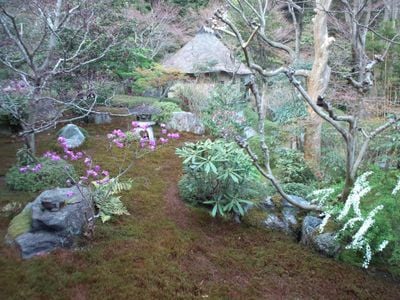
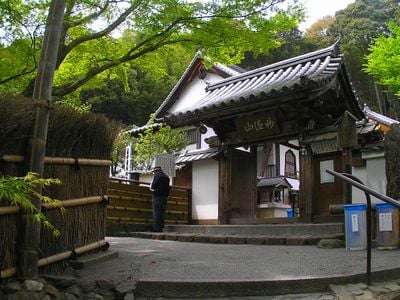
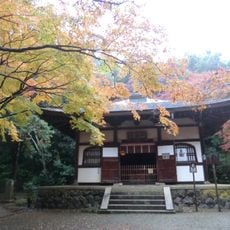
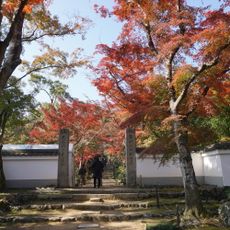
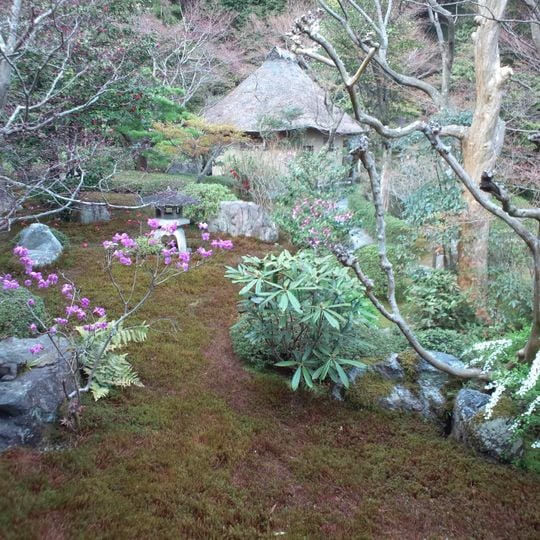
Kegon-ji is a single-story temple building in Nishikyō Ward, Kyoto, its steep roof a thick thatch of pale brown straw rounded at the ridge and broad at the eaves. Below the thatch the walls and supports are dark brown wood, with a lighter wall section and a window on the right. Mossy ground, rocks and shrubs surround it, and thin tree branches screen the view. Its gate has a broad tiered roof of grey tiles curving upward at the eaves, dark wooden beams and carved brackets beneath, and a plaque with dark characters above the passage.
The temple was established in 1723 by Buddhist scholar Hotan on the former grounds of Saifuku-ji. During the 19th century, the community left its original Kegon teaching and turned to Rinzai Zen instead.
The temple is nicknamed Suzumushi-dera after the bell crickets kept chirping indoors all year. In the reception hall monks give a roughly 30-minute suzumushi sermon, then serve tea and sweets to each visitor. The hall holds about 125 people, up to 175 at most, so weekend waits can approach an hour. The temple also takes worry consultations through its website and draws many women.
The temple is about 18 minutes on foot from Matsuo-taisha Station on the Hankyu Arashiyama Line, or a short walk from the Kyoto bus stop "Koke-dera Suzumushi-dera". The tea ceremony and bell-cricket sermon in the guest hall last about 30 minutes and hold roughly 125 people, so waits of nearly an hour occur on weekends in season. Around 70 free parking spaces are available.
The temple keeps roughly 10,000 bell crickets as adults at all times, a number that rises and falls with the season. The practice began with a former abbot who heard in their chirping the state of Zen awakening, and year-round rearing came from trial and error with temperature control for eggs and adults.
The community of curious travelers
AroundUs brings together thousands of curated places, local tips, and hidden gems, enriched daily by 93,458 contributors worldwide.