Tsukiyomi Shrine, Shinto shrine in Kyoto Prefecture, Japan
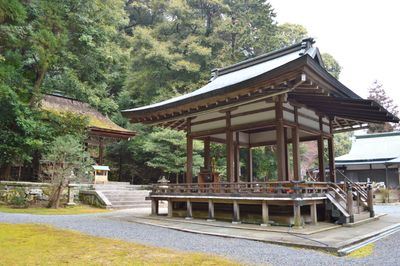
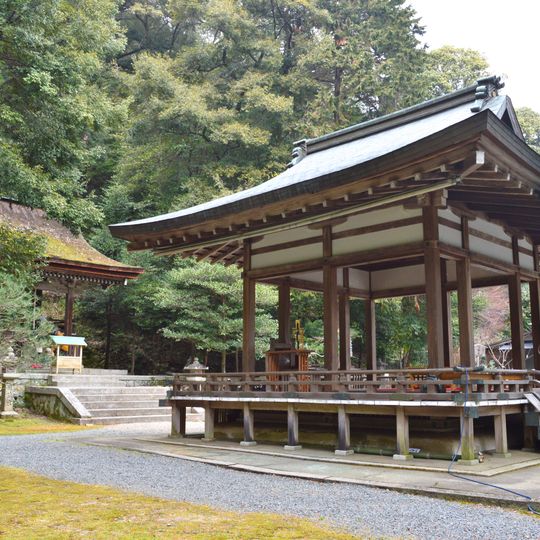
Tsukiyomi Shrine is a subsidiary shrine of Matsunoo Taisha, 400 meters south of it in Nishikyō Ward, Kyoto. Its worship hall (haiden) is an irimoya-zukuri building with a copper-plate roof, raised on a platform of vertical posts with an open veranda and low railing; the main hall (honden) is in nagare-zukuri style with a cypress-bark roof. The precinct is a Kyoto City designated historic site.
According to the Nihon Shoki, the shrine was founded after a moon god gave an oracle to the envoy Ahenomikotoshiro in the 3rd year of Emperor Kenzō, and Oshimi Sukune enshrined it at Utaarasuda in Kadono County; scholars date the actual founding to the mid-to-late 6th century. In 856 it was moved to Matsuo no Minamiyama to escape flooding. In 927 the Engishiki listed it as a Myōjin Taisha, and in 1877 it became an official subsidiary shrine of Matsunoo Taisha.
The shrine's name links to the Katsura district: a Yamashiro Fudoki legend says Tsukuyomi-no-Mikoto lodged in a katsura tree here, giving the place its name. At the October 3 annual festival and the Matsuo Taisha procession, this shrine alone carries a karabitsu chest instead of a portable mikoshi, said to recall a mikoshi lost in water.
The shrine stands 400 metres south of Matsunoo Taisha, about eight minutes on foot from Hankyu Matsuo Taisha Station on the Arashiyama Line. The precinct is a Kyoto City designated historic site; the worship hall, also used for prayers, is the copper-roofed structure at the front of the grounds.
In the Matsuo Taisha festival procession, Tsukiyomi Shrine carries a karabitsu chest instead of a portable mikoshi, because tradition says its mikoshi was once swept away by a flood. Some scholars link the chest and the shrine's Mifune-sha to the moon god's old role as a sea deity worshipped by the Iki clan.
The community of curious travelers
AroundUs brings together thousands of curated places, local tips, and hidden gems, enriched daily by 94,365 contributors worldwide.