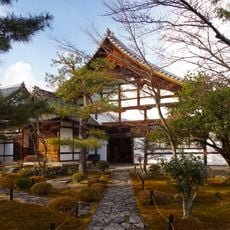
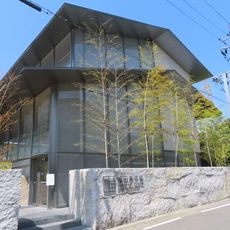
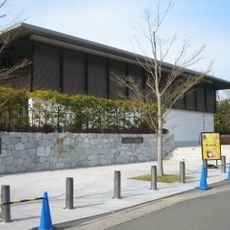
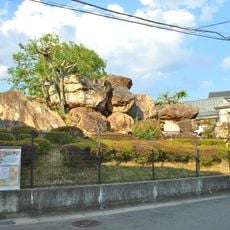
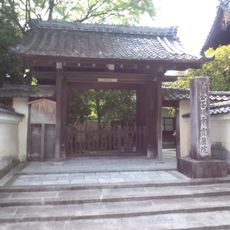
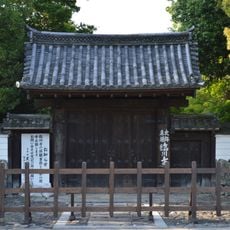
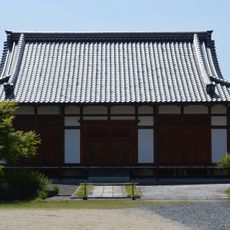
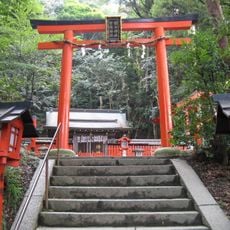
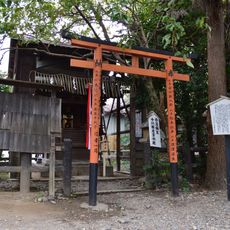
Kurumazaki Shrine, Shinto shrine in Ukyō-ku, Japan
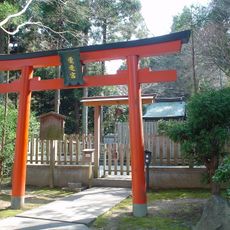
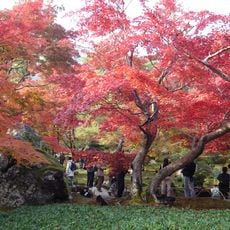
Kurumazaki Shrine is a Shinto place of worship in Ukyō Ward where more than 40 varieties of cherry trees grow, including Taiwan, Kawazu, Yoshino, and Keisen-zakura. This grove flowers from March throughout spring, with the trees opening their blossoms at different times.
Kiyohara no Yorinari, a Confucian scholar of the Heian period, died in 1189; a mausoleum was built on Kiyohara family land, and the temple Hōju-in later arose there, with a shrine to him inside its grounds. The shrine's name is linked to an oxcart that split or stalled before it, after which Emperor Go-Saga is said to have granted the title Kurumazaki-Daimyōjin and Senior First Rank. In the Meiji period the shrine became independent through the separation of Shinto and Buddhism, and the painter Tomioka Tessai, its priest, restored it.
The worship of Ame no Uzume no Mikoto draws people from theater and dance, who leave their prayers on wooden fence posts. These performer names inscribed on the posts show the close tie between this place and the performing arts.
The Randen Arashiyama Line stops directly at Kurumazaki-jinja Station, from which the grounds are a very short walk. City buses also reach the Kurumazaki-jinja-mae stop, which is equally close.
The shrine's name comes from two legends: either an oxcart split apart as it passed the shrine, or Emperor Go-Saga's cart stopped here during a river excursion, prompting him to grant the title Kurumazaki-Daimyojin and Senior First Rank. The shrine also appears in many period dramas, including Abarenbo Shogun and Mito Komon, because Toei and Shochiku studios stand nearby.
The community of curious travelers
AroundUs brings together thousands of curated places, local tips, and hidden gems, enriched daily by 93,542 contributors worldwide.