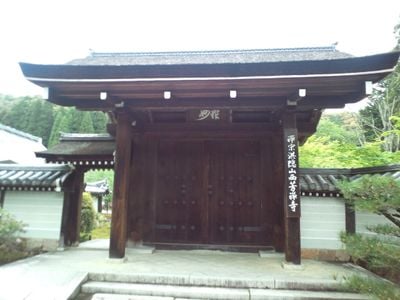
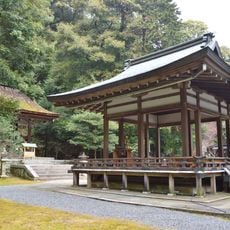
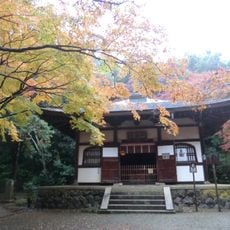
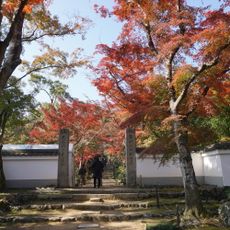
Saihō-ji Temple, Buddhist temple and garden in Nishikyō-ku, Japan
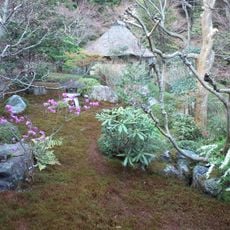
Saihō-ji is a Zen temple in Kyoto featuring two distinct garden levels with carefully designed pathways and stone placements. Over 120 moss species blanket the landscape, creating a layered green environment across the upper and lower garden areas.
Temple legend holds that Gyōki converted a villa of Prince Shōtoku into a Hossō temple in 731, named Saihō-ji (西方寺). In 1339 the Matsunoo Shrine priest Fujiwara Chikahide invited Musō Soseki, who rebuilt it as a Zen temple, renamed it 西芳寺, and laid out the upper dry garden. Fire in 1469 and floods in 1485, 1624–1644 and 1688–1704 repeatedly damaged it; it was restored in 1878 and the garden opened to the public in 1928.
The name Saihō-ji was chosen by Musō Soseki in 1339, replacing the earlier Saihō-ji (西方寺). The new characters refer to Zen phrases about Bodhidharma: "the ancestral teacher came from the West" and "five petals spread their fragrance." Today visitors copy sutras in the main hall before walking the moss garden.
Advance booking is required since visitor numbers are strictly limited each day. Wear comfortable shoes with good grip, as the moss-covered pathways can be slippery, especially after rain.
Steve Jobs, Apple's co-founder, reportedly visited Saihō-ji privately with his family. In April 2015, an Amida Buddha statue kept in one of the tea houses was stolen. The temple's three tea houses take their names from phrases in the Zen text Blue Cliff Record.
The community of curious travelers
AroundUs brings together thousands of curated places, local tips, and hidden gems, enriched daily by 93,244 contributors worldwide.