Henjō-in, Buddhist temple in Chiryū, Japan.
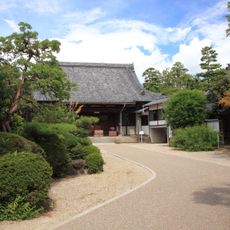
Henjō-in is a Shingon-shū Buzan-ha temple in the Kōbō-chō district of Chiryu, Aichi Prefecture, with the mountain name Kōbō-zan. Its main image is a self-portrait of Kūkai said to be carved by his own hand, shown looking back over his shoulder. The temple is the first of the three Mikawa Kōbō pilgrimage sites, followed by Saifuku-ji and Mitsuzō-in.
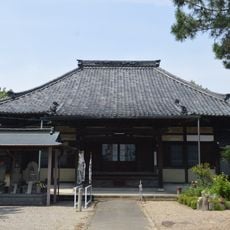
According to temple tradition, Kūkai stayed about a month at this site in 815 (Kōnin 6) while travelling through the Kantō region, carved three self-portraits, and one of them became the main image of the temple founded here. In 1673 (Enpō 1) the temple moved from Kamishigehara to its present location as a prayer temple of the Kariya domain lord. The main hall was completed in 1979.
Locals call the temple "Mikaeri Kōbō" or "Chiryū's Kōbō-san", after the main image: a self-portrait of Kūkai shown looking back over his shoulder, said to be one of three he carved here in 815. On the 21st of each lunar month, the anniversary of Kūkai's death, a temple fair fills the grounds; on the 21st of the third lunar month the image is displayed at the Zen-no-tsuna rite.
The temple stands at 19 Kōbōyama, Kōbō-chō, Chiryu, about 20 minutes on foot from Chiryu Station on the Meitetsu Nagoya Main and Mikawa lines. A remote worship spot (yōhaijo) is located just outside the station's north ticket gate. The grounds are visited on the lunar 21st of each month, Kōbō Daishi's memorial day, when the temple holds its ennichi fair.
The honzon is a self-portrait of Kūkai said to be carved by his own hand, shown looking back over his shoulder — hence the local name Mikaeri Kōbō. According to temple tradition, Kūkai stayed about a month at this spot in 815 while travelling through the Kantō region and carved three self-images, one of which became the main image here.
The community of curious travelers
AroundUs brings together thousands of curated places, local tips, and hidden gems, enriched daily by 94,523 contributors worldwide.