Nishikiori-Jinja, Shinto shrine in Japan
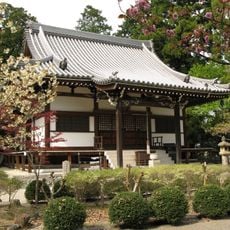
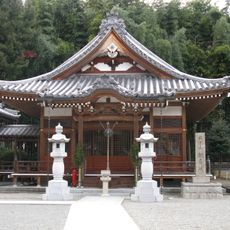
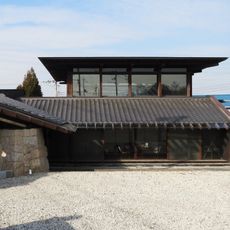
Nishikiori-Jinja is a Shinto shrine in Tondabayashi whose main hall was rebuilt in 1363 by Miyoshi Sadayuki. The three-bay irimoya-zukuri building has a cypress-bark roof with a triangular chidori-hafu above a curved kara-hafu on the front, a roof style called Nishikiori-zukuri. A large stone torii stands beside Kawanishi Elementary School, opening onto a 150-meter approach.
The shrine's origin is unknown; Heian-period roof tiles found during the 1935 repair of the main hall suggest it existed by the mid-Heian period. The main hall was rebuilt in 1363 by Miyoshi Sadayuki. In the Meiji era the Buddhist temple Konrinji was abolished, and in 1907 the shrine was renamed Nishikiori Jinja.
The name Nishikiori comes from the Nishikibe, weavers who, according to tradition, came from Baekje and settled this area, which was called Nishikibe after them. The shrine was originally named Nigori Jinja and served as the clan shrine of the Nishikibe. Locals still pronounce the name Nishikori, Nishikoori or Nishigori.
The nearest station is Kawanishi on the Kintetsu Nagano Line, about 200 metres west of the shrine, a walk of roughly three minutes. The approach runs from a large stone torii beside the gate of Kawanishi Elementary School along a 150-metre path once used for horseback archery and called Babasaki.
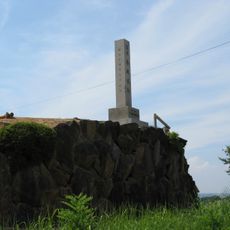
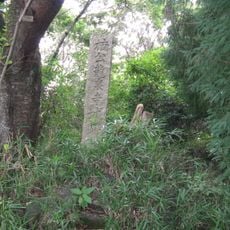
The main hall's roof combines a chidori-hafu gable with a karahafu gable, a form called the Nishikiori-zukuri prototype; it is said to have influenced Nikko Toshogu. Beside the approach stands a monument to the Tenchu-gumi uprising, raised in 1963 by descendants of Mizugori Zen'nosuke, the Koda village headman who rose with his son Eitaro.
The community of curious travelers
AroundUs brings together thousands of curated places, local tips, and hidden gems, enriched daily by 93,511 contributors worldwide.