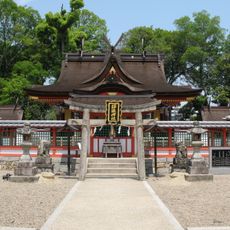
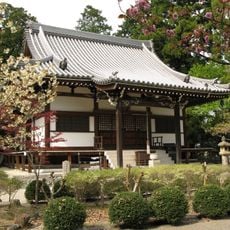
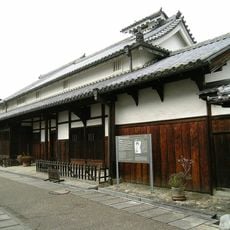
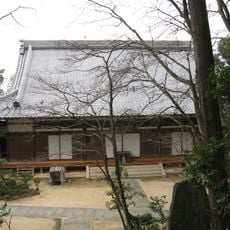
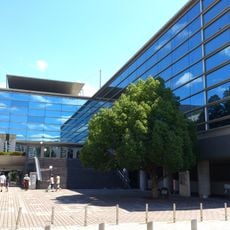
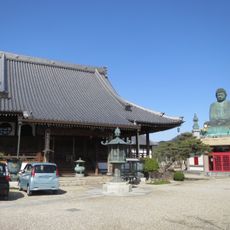
Ganshō-ji, Buddhist temple in Tondabayashi, Japan.
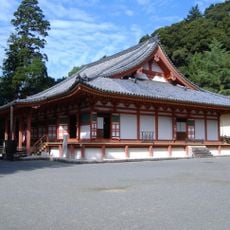
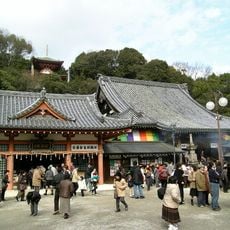
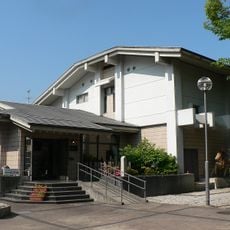
Ganshō-ji is a temple of the Shingon-lineage new religion Hasshū Kengaku Shinshū-kyō in Fushimido, Tondabayashi, Osaka Prefecture, and is known as a temple built largely by the hands of its followers. Its main hall has a total floor area of 550 tsubo, the largest among Shingon-lineage temples built after the war. The grounds also hold a bell tower with a 12-ton bronze bell and a five-story pagoda completed in November 2011, the only wooden one in Osaka Prefecture.
The temple was founded in 1941 by the teacher Jōshin and his sister Chishin, and the mountain was opened in 1952 by the first Ganshō Daikashō and Jōshin Dahōni. It was certified as a religious corporation in 1954. It is the head temple of Hasshū Kengaku Shinshūkyō, a Shingon-derived new religion.
Ganshō-ji is the head temple of Hasshū Kengaku Shinshūkyō, a Shingon-derived new religious movement whose teaching draws on the eight schools of Japanese Buddhism. It was founded in 1941 by the teacher Jōshin and his sister Chishin, and the temple buildings were made largely by the hands of believers. The grounds are known for plum blossoms.
The temple is in the Fushimido district of Tondabayashi, about 15 minutes on foot east of Kintetsu Nagano Line Shionomiya Station. The grounds rise toward the Hiko Daimyojin shrine, and a nearby observation deck looks over Tondabayashi and, on clear days, Osaka Bay.
The five-storey pagoda, finished in November 2011, is the only wooden one in Osaka Prefecture; its completion ceremony was postponed to May 2012 out of respect for the Tōhoku earthquake. The bell tower holds a 12-tonne bronze bell, the fourth largest in Japan, in a structure built entirely of keyaki wood.
The community of curious travelers
AroundUs brings together thousands of curated places, local tips, and hidden gems, enriched daily by 94,360 contributors worldwide.