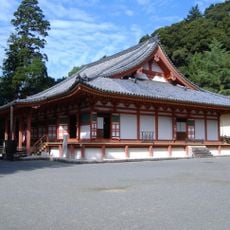
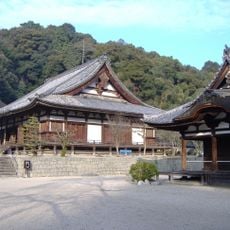
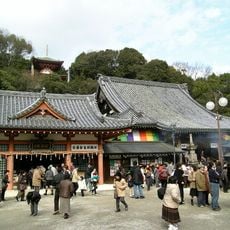
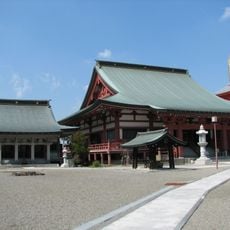
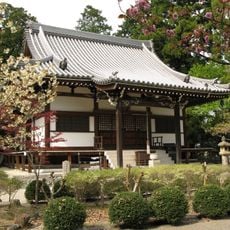
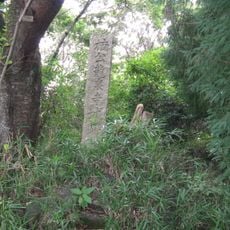
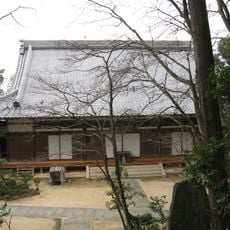
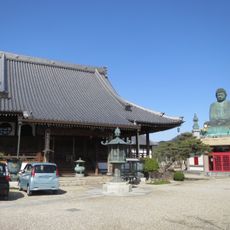
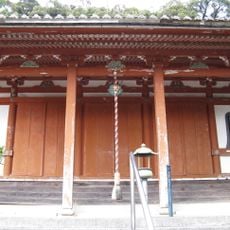
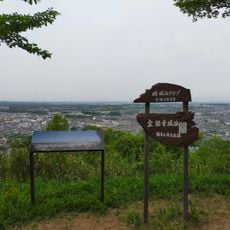
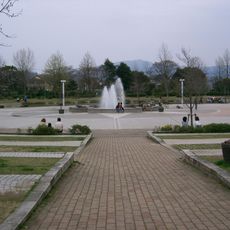
Eboshigata Hachiman Shrine, Shinto shrine on Mount Eboshigata, Kawachinagano, Japan.
Eboshigata Hachiman Shrine is a Shinto sanctuary on the eastern slope of Mount Eboshigata with traditional wooden buildings, torii gates, and multiple altar structures arranged on the hillside. The complex demonstrates classical shrine architecture adapted to the natural terrain.
Tradition credits Kusunoki Jiro with founding the shrine as guardian of Eboshigata Castle, one of the Kusunoki Seven Castles. The main hall was rebuilt in 1480 by Ishikawa Hachirozaemon, a claimed descendant of the Kawachi Genji; a 1965 dismantling found ink inscriptions confirming this date. In 1617 Kaiho Masafusa, said to descend from the Kusunoki, repaired it with surplus timber from Osaka Shitenno-ji, completing work in 1622. It became a village shrine in 1868 and absorbed Oshio Hachiman Shrine in 1903.
The shrine's name comes from Mount Eboshigata, whose shape resembles an eboshi court cap. Its autumn grand festival is held on the second Saturday and Sunday of October, the Ebisu festival on 6 and 7 January, and the yudate boiling-water rite on the second Sunday of December.
The shrine is a 15-minute walk south from Kawachinagano Station on the Nankai Koya and Kintetsu Nagano lines, or a 15-minute walk north from Mikkachicho Station on the Nankai Koya Line. The approach climbs the slope of Mount Eboshigata, so allow extra time and wear shoes suited to uneven ground.
The shrine's main hall, rebuilt in 1480, was repaired in 1622 using leftover timber from the construction of Shitenno-ji in Osaka, carried out by Kashiwabara Masafusa, said to be a descendant of the Kusunoki family. A ridge tag found during the 1965 dismantling bears an ink inscription confirming the 1480 date.
The community of curious travelers
AroundUs brings together thousands of curated places, local tips, and hidden gems, enriched daily by 93,545 contributors worldwide.