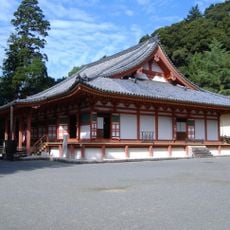
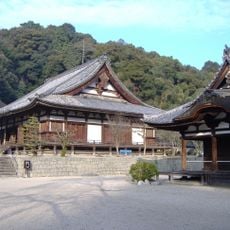
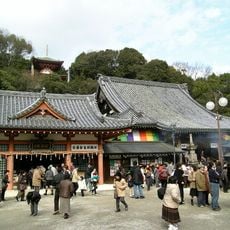
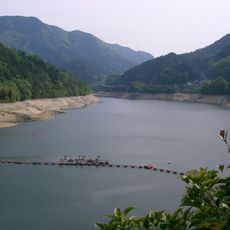
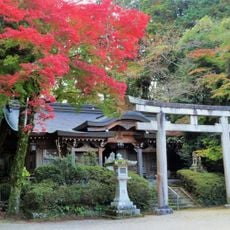
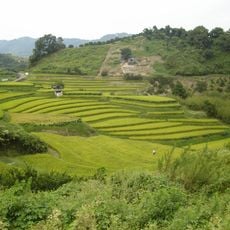
Kozenji, Buddhist temple in Kawachinagano, Japan.
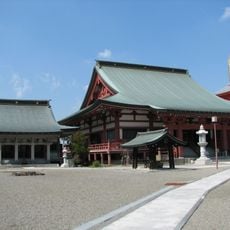
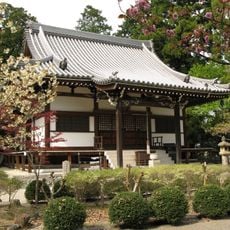
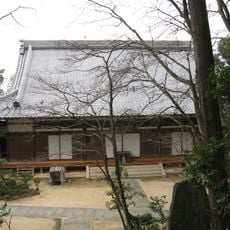
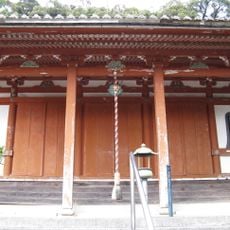
Kozenji is a Buddhist temple complex in Kawachinagano featuring a main hall called the Hondo and supporting structures set among tall cedar trees. The natural pathways created by the forest setting connect the various buildings and grounds throughout the property.
According to tradition, the temple was founded by Gyōki and completed in 767 as Jingu-ji or Daijō-in, with Kamitsukami (now Akasaka Kaminoyama Shrine) as its guardian deity. In 1699 it was converted to the Sōtō school of Zen, and its buildings were enlarged and rebuilt in Zen style.
The temple's pond holds a rare striped lotus (madara-hasu) said to have been planted when the temple was founded, now found at only a few sites nationwide. Around the pond stand numerous rakan statues, carved figures of the Buddha's disciples, which visitors walk past on the grounds.
Kozenji stands in the Mikka-no-dai district of Kawachinagano, Osaka Prefecture, on the slope of a hill; the approach is uphill, so allow time for the climb. The lotus pond and the rows of rakan statues around it are outdoors, and the pond is best visited when the lotus is in leaf. The temple belongs to the Soto school and its main image is Kannon, the bodhisattva of compassion.
The temple's principal image is a wooden seated Amida Buddha from the late Heian period, designated a National Important Cultural Property. The pond holds mottled lotus plants said to have been planted when the temple was founded, a variety now found at only a few sites nationwide.
The community of curious travelers
AroundUs brings together thousands of curated places, local tips, and hidden gems, enriched daily by 94,280 contributors worldwide.