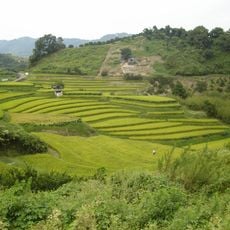
Naipian-Kannonji, Buddhist temple in Tondabayashi, Japan.
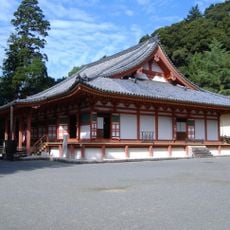
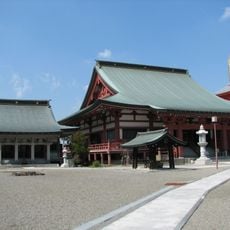
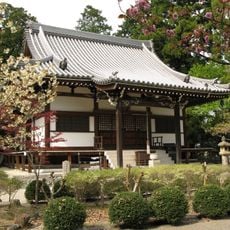
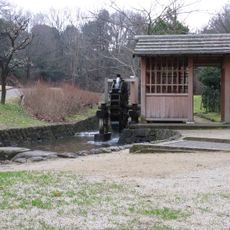
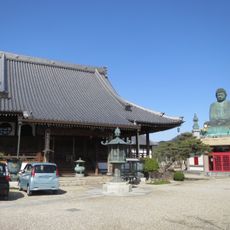
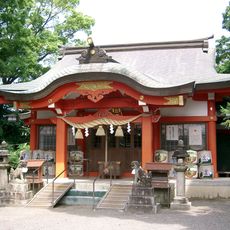
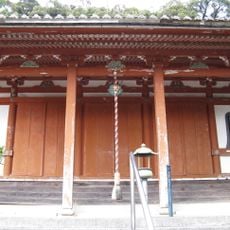
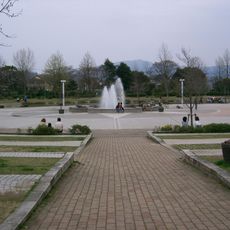
Naipian-Kannonji is a Buddhist temple in Tondabayashi featuring a main hall that houses a statue of Senju Kannon, a compassion deity depicted with multiple arms. The temple sits within landscaped grounds that include gardens and pathways for visitors to walk through.
The temple began in 1339 when Kusunoki Masatsura built a hall on Mount Hōjō enshrining a Senju Kannon that had belonged to Emperor Go-Daigo. After Masatsura and his brother Masatoki died in 1348, their mother Kuniko retired here as the nun Haikyōni. The hall later became Kannon-ji, was abandoned in 1873, and was rebuilt from 1917 by Katō Shinnosuke.
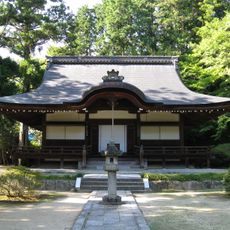
The name Naipian-An comes from the thatched hermitage where Kusunoki Masatsura's mother, Kuniko, lived as the nun Haikyo-ni and prayed to an eleven-faced Kannon for her husband and sons. The temple is stop 20 on the Kawachi Saigoku pilgrimage, and the Kannon hall enshrines that same eleven-faced image.
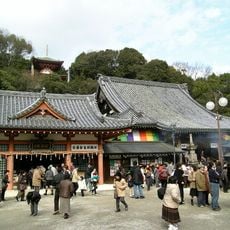
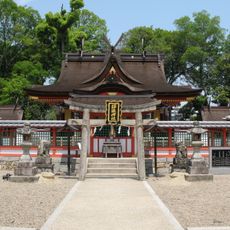
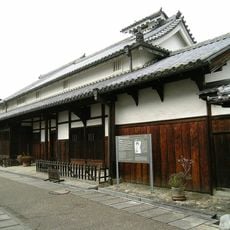
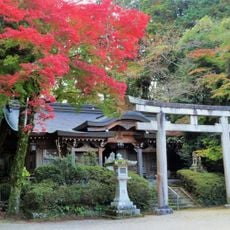
The temple stands at 1103 Amanago, Tondabayashi, a short walk from the Amanago stop on the Rainbow Bus Tojo line from Tondabayashi Station. The precinct is entered through a south gate built in 1991 that leads to the rear approach; the main gate, moved here in 1964 from Eirin-ji in Yamanashi, is a four-legged gate of chestnut wood.
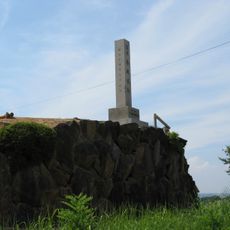
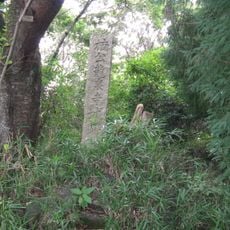
The tomb of Nanko Hisako, known as Haikyo-ni, stands in the grounds; she lived here for sixteen years after her husband and sons died at the Battle of Shijo-Nawate in 1348. A seven-story stone tower nearby serves as a memorial for the Kusunoki clan.
The community of curious travelers
AroundUs brings together thousands of curated places, local tips, and hidden gems, enriched daily by 93,407 contributors worldwide.