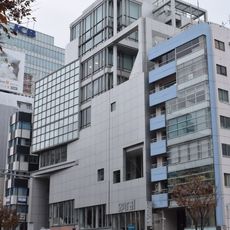
Chōkoku-ji, Sōtō Zen temple in Nishi-Azabu, Minato, Tokyo, Japan
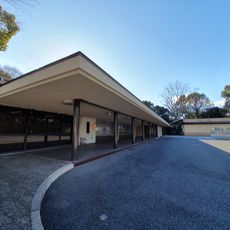
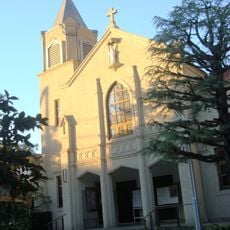
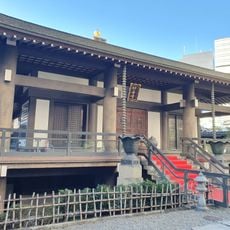
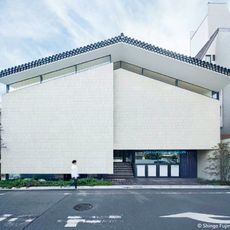
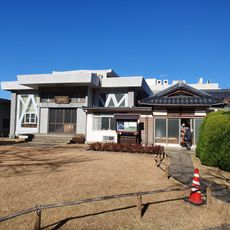
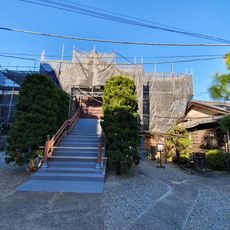
Chōkoku-ji is a Sōtō Zen temple in Nishi-Azabu, Minato, Tokyo, formally the Tokyo branch temple of Eihei-ji and known as Fudarasan. Its buildings include a hattō, an ukedoke, a kaikan, a Kannondō and a monks' zendō training hall. The Kannondō houses a standing eleven-faced Kannon about 10 metres tall, carved by the sculptor Ōuchi Seiho.
Yamaguchi Shigemasa founded Chōkoku-ji in 1598 on the site of an earlier Shibuya-gahara Kannon hall, with Mon'an Sōkan as founding abbot. In 1584 it merged with Fudazan Ryōun-in from Tameike, raising its status. The temple and main image burned in the 1945 air raids and were rebuilt in 1977.
The temple belongs to the Sōtō school as the Tokyo branch temple of Eihei-ji, and its Kannon hall holds the eleven-faced Kannon known as the Azabu Kannon, the 22nd of the 33 Kannon pilgrimage sites of Edo. The main image is a wooden standing figure about 10 metres tall, carved by the sculptor Ōuchi Seiho and completed in 1977; its face is said to be modelled on Empress Kōjun. The statue was made from a camphor tree over 600 years old from Ōkawa, Fukuoka, after the earlier image burned in the 1945 air raids.
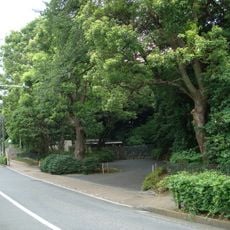
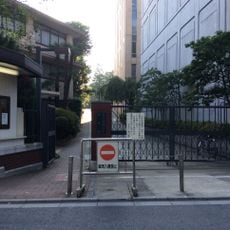
The temple is in Nishi-Azabu 2-chome, Minato; the main entrance faces the Takagi-machi intersection, while the Edo-period approach ran east toward the Nishi-Azabu crossing. The nearest stations are Omotesando (Hanzomon, Chiyoda, Ginza lines), Hiroo (Hibiya) and Roppongi (Hibiya, Oedo), each 15 to 20 minutes on foot.
The eleven-faced Kannon in the Kannon Hall is about 10 metres tall, carved by sculptor and Buddhist image-maker Ōuchi Seiho and completed in 1977. It replaced a 2 jō 6 shaku statue of 1716 lost in the 1945 air raids, and was carved from a 600-year-old camphor tree from Ōkawa, Fukuoka.
The community of curious travelers
AroundUs brings together thousands of curated places, local tips, and hidden gems, enriched daily by 93,651 contributors worldwide.