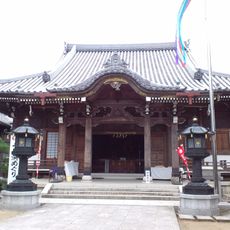
Konren-ji, National Treasure Buddhist temple in Nishio, Japan
Konren-ji is a Soto Zen temple in Nishio whose National Treasure Amida-do is a three-by-three-bay hall with a hip-and-gable roof of cypress bark. Its plan follows the one-bay, four-sided Amida hall type, but the inner chamber sets the welcoming pillars slightly back rather than using four central pillars. A pent roof with a curved gable covers the front bay and two bays of the right side, and a veranda runs around the building.
The temple's founding date is unknown; it began as a sub-temple of the Shingon temple Kōfuku-ji. In 1340 Ashikaga Takauji moved it to its present site and named it Shōryūzan Konren-ji. Under the patronage of the Kira clan, lords of this area and hatamoto of the Edo shogunate, it was converted to the Sōtō school during the Kansei era (1789–1801).
The temple grounds are maintained by followers of the Soto school of Buddhism, who conduct daily rituals and pass their religious practices to younger generations. The ceremonies and daily rhythm here show how living Buddhist traditions continue to be observed in Japan today.
The temple is at 1 Aza-Nanatokagairi, Aiba, Kira-cho, Nishio, in eastern Aichi Prefecture. The Amida-do, the National Treasure hall, stands within the precinct; visitors should look for its hip-and-gable cypress-bark roof and the pent roofs on its front and right side. The hall is a small three-bay wooden structure, so viewing is from outside and around the building.
The Amida-dō is the only National Treasure in Nishio and one of the oldest buildings in the Tōkai region. Its plan follows the one-bay, four-sided Amida hall type seen at Chūson-ji's Konjiki-dō, but it sets no four-pillar frame in the inner sanctum: the raigō pillars stand slightly behind centre, carrying a raigō wall with the altar before it. Look for the shōji on the front and the sparse rafters of the flying eaves.
The community of curious travelers
AroundUs brings together thousands of curated places, local tips, and hidden gems, enriched daily by 94,728 contributors worldwide.