Suzumemiya Shrine, Shinto shrine in Tochigi Prefecture, Japan
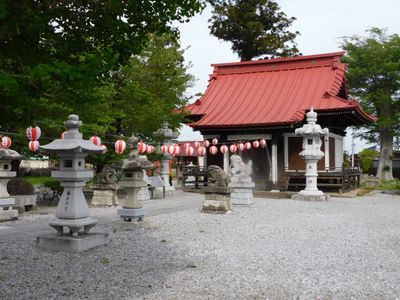
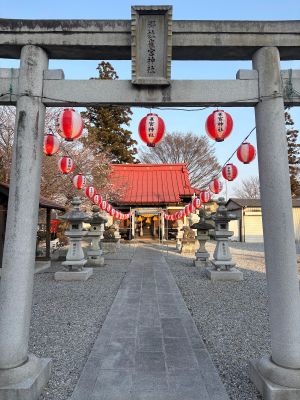
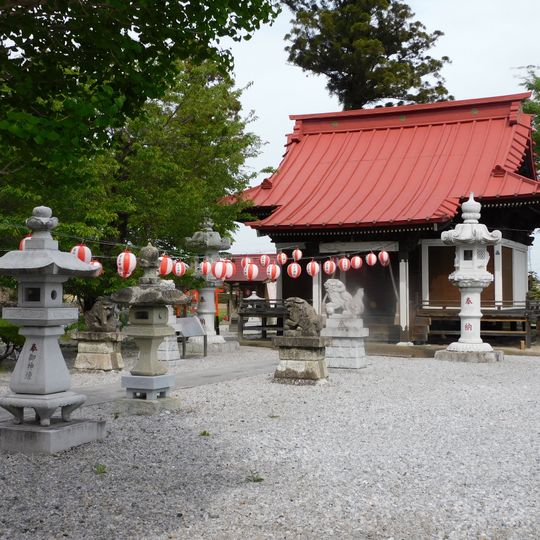
Suzumemiya Shrine in Utsunomiya has a main hall with a steeply pitched red roof of parallel ridges, dark wooden beams and bracket work, and a veranda with pale lattice panels. A row of red-and-white paper lanterns hangs under the eaves, and a tall gray stone lantern stands to the right of the entrance.
Tradition dates the shrine's founding to 997, when Fujiwara no Sanekata is said to have established it here after his wife Ayame died on the road to Mutsu, leaving a sacred jewel to be worshipped as the local guardian deity. The shrine later served the Suzumemiya-juku post station on the Nikkō-kaidō. In 1713 Emperor Higashiyama granted a gold-lettered plaque reading "Suzumemiya", and daimyō travelling to Nikkō are said to have dismounted to pay respects.
Local families visit regularly to pray for health, good harvests, and safe travels. The shrine serves as a gathering place where traditional practices and seasonal rituals connect people to their community and beliefs.
The shrine is about an 8-minute walk from JR Suzumenomiya Station on the Utsunomiya Line, not Utsunomiya Station. Its approach entrance lies on National Route 4 at the 100 km point, with a "100 km to Tokyo" kilometre post 20 m north of the entrance.
The shrine's name appears in a legend about Princess Ayame, who fell ill while travelling to join her husband Fujiwara no Sanekata in Mutsu. On her deathbed she asked that a sacred jewel be kept and worshipped locally as the guardian deity of the land, and the villagers did so. The shrine's founding is traditionally dated to 997, when Sanekata is said to have built it.
The community of curious travelers
AroundUs brings together thousands of curated places, local tips, and hidden gems, enriched daily by 95,355 contributors worldwide.