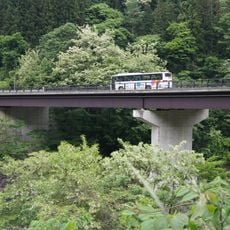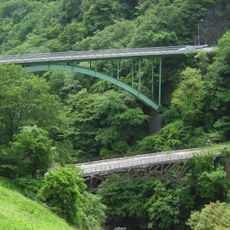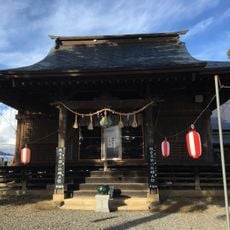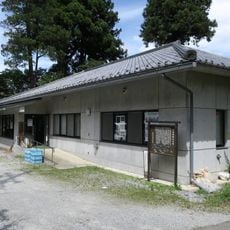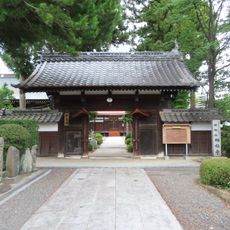
雑炊橋, Road bridge in central Matsumoto, Japan.
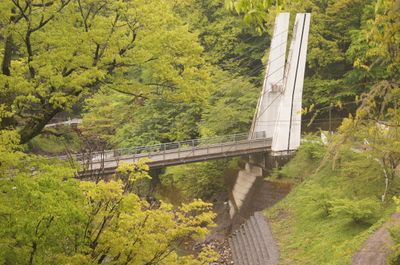
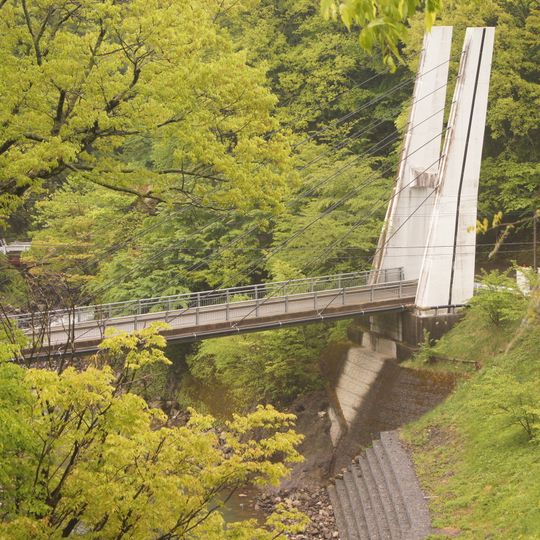
Zosui-bashi is a cable-stayed road bridge over the Azusa River in the Azumi district of Matsumoto, Nagano Prefecture. It links the district centre with the Hashiba settlement. The current 1987 structure has a cantilevered cable-stayed design, replacing earlier wooden bridges that had been rebuilt for centuries.
A bridge has stood here since the Heian period, when it was built as a hane-bashi (cantilevered bridge) over the Azusa River, one of the three famous hane-bashi of the Edo period. It was managed directly by the Matsumoto domain as a key link between Azumi and Chikuma districts, and a checkpoint (bansho) stood at the Hashiba settlement on the right bank. The current cable-stayed bridge dates from 1987.
The name was standardised as Zosui-bashi in 1911, when the wooden cantilever bridge was replaced by a timber-framed suspension bridge. Older records write it as Zoshi, Zoshoku, Zoshi or Zosui, and the form Zoshi-bashi was used in speech. The name recalls a legend of a couple, Setsu and Seimei, who saved money on rice porridge to build a bridge.
The current 1987 cable-stayed bridge carries the road linking Matsumoto's Azumi district centre with the Hashiba settlement. Since the 1870 Niibuchi bridge took over through traffic, it mainly serves local crossings; in 1991 it briefly became a detour when National Route 158 collapsed. The Azumi branch office and Azumi elementary and junior high school stand nearby.
The name was standardized as Zosui-bashi in 1911, when the wooden cantilever bridge was replaced by a timber-framed suspension bridge. Older records write it as Zoshi, Zoshoku, Zoshi or Zoshi, and the form Zoshi-bashi was used in speech. The 1911 change drew on the legend of Sett and Seimei, who saved on zosui rice porridge to pay for a bridge.
The community of curious travelers
AroundUs brings together thousands of curated places, local tips, and hidden gems, enriched daily by 94,831 contributors worldwide.