願成寺, Buddhist temple in Nishi-ku, Yokohama, Japan.
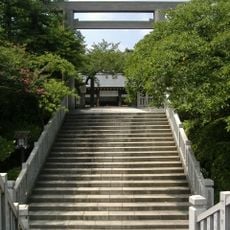
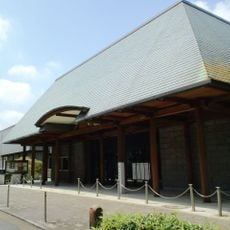
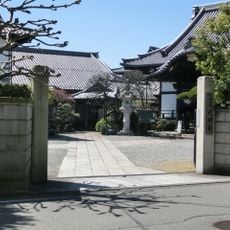
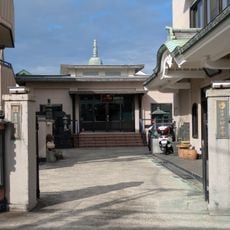
Ganjoji is a Shingon temple of the Koyasan branch in Nishi-ku, Yokohama. Its main hall, rebuilt after the 1923 Great Kanto Earthquake, houses the hibutsu Enmei Jizo Bosatsu, kept hidden from view. At the gate stands the Nichigen Jizo, which absorbed two other Jizo statues burned out of their original sites in 1923. The grounds also hold a ginkgo and a southern magnolia designated as Yokohama protected trees.
Tradition credits the monk Gyōki with founding a hermitage here in the Nara-period Tenpyō era, after digging beside the road and striking spring water; the site was named Hōkizan. Until the Meiji era it served as the betsu-ji of Sugiyama Shrine below Kurayami-zaka, near today's Nishi Ward Office, and after the port opened it housed the newly created Kanagawa magistrate's office quarters. The 1923 Great Kantō earthquake burned it down; the rebuilt main hall stands today.
The temple's main image, an Enmei Jizo Bosatsu, is a hibutsu kept hidden from view, while the Hinichi Jizo in front of the gate is the one worshippers address. The Hinichi Jizo festival, held on days containing a 4 in June, July and August, is organised by the Nishimae Ginza shopping street and has continued since the early Showa era.
The temple stands about a 10-minute walk from Tobe Station on the Keikyu Main Line. Visitors should be aware that temple grounds may have their own guidelines for conduct and access during ceremonies.
In the grounds are the graves of Shimizu Seiji and Mamiya Hajime, executed for the 1864 Kamakura incident in which two British officers were killed while sightseeing. Nearby lies the grave of the tobishoku Kogame, executed in 1866 for killing a French sailor at the Yokohama pleasure quarter.
The community of curious travelers
AroundUs brings together thousands of curated places, local tips, and hidden gems, enriched daily by 94,832 contributors worldwide.