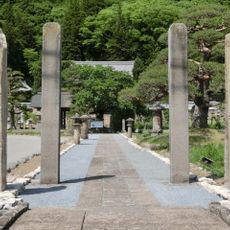
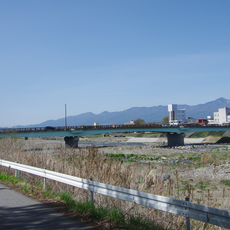
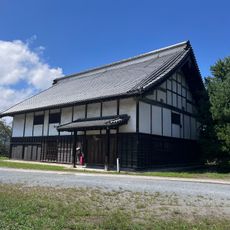
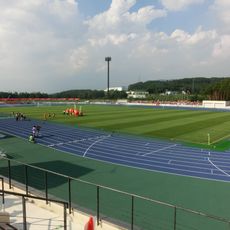
竜雲寺, Buddhist temple in Saku, Japan.
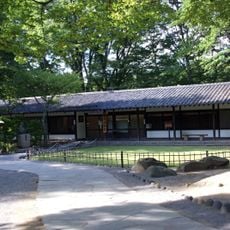
Ryūunji is a Sōtō Zen temple at the foot of the mountains in Iwamurata, Saku, with the mountain name Ōtasan. Its main hall enshrines an Eleven-Faced Kannon, and the grounds hold the Chano-yu Well, one of the seven Iwamurata wells, plus the Shingen Well. A grove called Ryūunji-bayashi behind the hall serves as the parishioners' cemetery.
Founded in 1312 as a Rinzai temple by Ōi Genkei, with Jōgaku Tenchū as founding abbot, Ryūunji declined after war fires and was revived in the Bunmei era (1469–1487) by the Sōtō monk Ten'ei Shōtei, who converted it to Sōtō Zen. Takeda Shingen later made it a Sōtō headquarters in Shinano, inviting Kitakō Zenshuku from Echigo; the temple's own Kitakō lineage record dates this revival to 1561, during the Kawanakajima campaigns. In 1572 it held the Senbon Hōchō-e, receiving a plaque from Emperor Ōgimachi.
The temple's name is written both 龍雲寺 and 竜雲寺. Its mountain name, Ota-san, appears in the Edo-period record 'Ota-san Jitsuroku'. The temple once held a monk-recorder role for Soto Zen temples in Kai and Shinano provinces, and its medieval documents are designated cultural property of Saku City.
The temple stands in the Iwamurata district of Saku, near the Nakasendo road. The grounds hold several named wells: the Chanoyu Well northwest of the main hall, one of the Iwamurata Seven Wells, and the Shingen Well southwest of it. The temple grove northeast of the main hall serves as the parishioners' cemetery.
In May 1931 a tea kettle containing bones, a short sword and a inscribed kesa ring was dug up in the temple garden; the bones were argued to be those of Takeda Shingen, and the dispute over their authentication led the state to refuse designation as a historic site and the abbot to sue. The temple is one of several places claimed as a cremation site of Shingen.
The community of curious travelers
AroundUs brings together thousands of curated places, local tips, and hidden gems, enriched daily by 93,120 contributors worldwide.