Koyasan Reihōkan, Buddhist art museum in Kōya, Japan
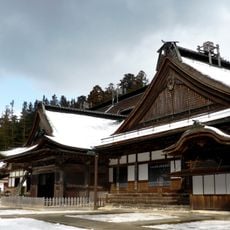
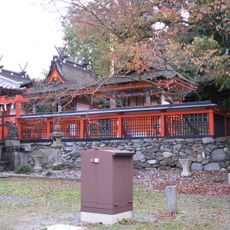
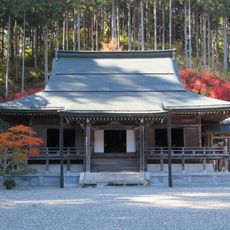
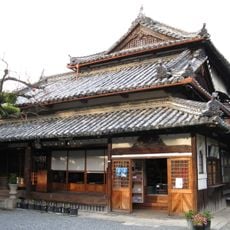
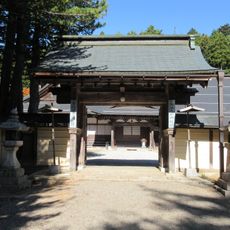
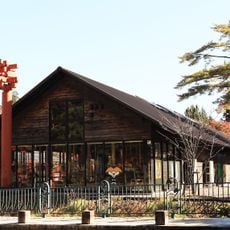
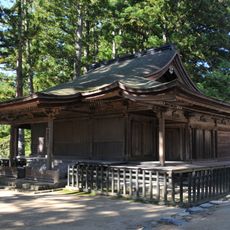
Koyasan Reihōkan is a museum on Kōya-san in Wakayama Prefecture, southwest of Daishi Kyōkai, the administrative center of Shingon Buddhism. Its first building, completed in 1920, consists of two connected halls loosely modeled on the Phoenix Hall of Byōdō-in in Uji. A fireproof building added in 1984 doubled the display space, and sheltered walkways link the admission office and the museum buildings.
The museum was founded in the 1920s, after government reforms had weakened many Buddhist institutions and it became urgent to protect the religious artworks that risked being lost or scattered. The building itself was later recognized as a registered tangible cultural property of Japan.
The collection of the Koyasan Reihōkan brings together Buddhist statues and mandalas gathered by monks from across the Kōya region. Walking through the halls, you notice that these objects are treated not simply as art but as items that were once part of daily religious life.
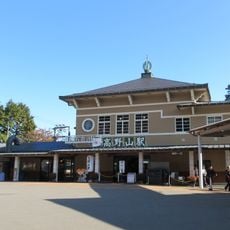
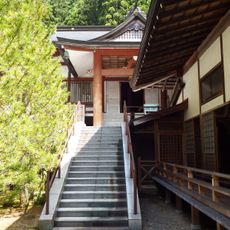
The museum is in Kōya, a short walk from the Senjuinbashi bus stop or immediately at the Reihōkan-mae stop on the Nankai Rinkan bus from Kōya-san Station. The old building lacks full climate control, while the 1984 wing has controlled lighting and humidity. The admission office and museum buildings are linked by sheltered walkways.
Some of the objects held in the museum were never displayed in temples but were used only during private ceremonies and are rarely seen by anyone outside those rituals. Their inclusion in the collection was the only way to keep them from being lost entirely.
The community of curious travelers
AroundUs brings together thousands of curated places, local tips, and hidden gems, enriched daily by 94,630 contributors worldwide.