Tate Castle, Historic castle ruins in Assabu, Japan
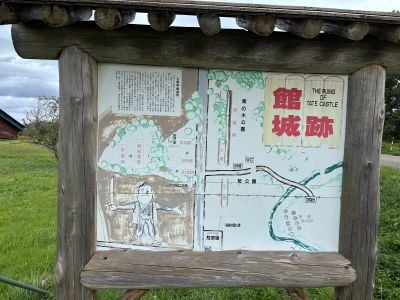
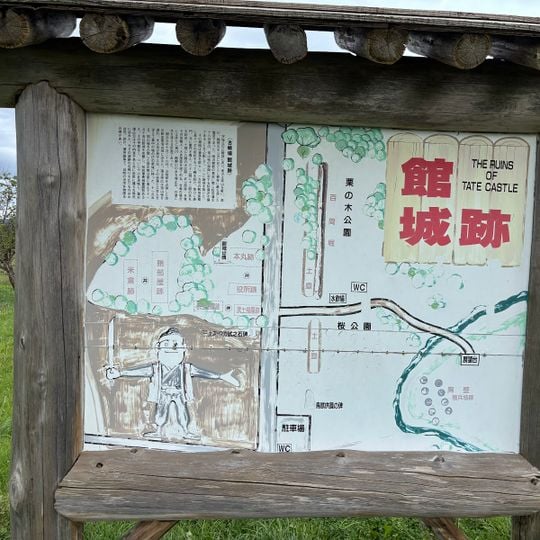
Tate Castle is a Japanese fort built by the Matsumae clan in 1868 in inland Assabu, surrounded by a moat about 3.64 metres wide and earthen ramparts with a log palisade. Inside were the main enclosure, offices, two samurai quarters, a kitchen building and a rice storehouse; the west gate faced front, the north gate rear.
The Matsumae clan began building Tate Castle in 1868, just before the Hakodate War, to replace Matsumae Castle, which was exposed to naval bombardment, and to serve as a base for reclaiming the Assabu River basin. The rushed work was largely finished by late October. On 15 November 1868, about 200 troops under Shirojiro Matsuoka attacked; the roughly 60 defenders were overwhelmed and the castle burned by midday.
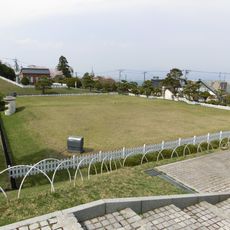
The castle gave its name to the Tate domain, which the Matsumae clan adopted after the Boshin War. The site is a nationally designated Historic Site, and visitors can see the earthworks and moat lines of the 1868 fortification.
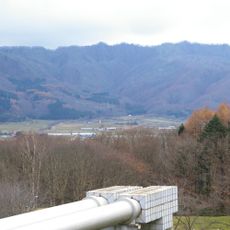
The castle site lies in the Tate district of Assabu, inland from the coast and reached by road from the town. The earthworks survive as a square enclosure about 33,000 square metres, ringed by a dry moat roughly 3.6 metres wide with earthen ramparts and a timber fence line. The ground is open, with rivers on the east, west and north sides and a mountain to the south.
The castle's valuables and furnishings had been moved here from Matsumae Castle; after the fall, the former shogunate troops later returned them to the Matsumae clan through an intermediary. The site is now a national Historic Site of Japan.
The community of curious travelers
AroundUs brings together thousands of curated places, local tips, and hidden gems, enriched daily by 94,704 contributors worldwide.