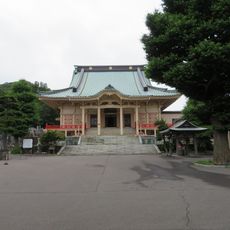
Shinshū Ōtani-ha Hakodate Betsuin, Buddhist temple in Hakodate, Japan
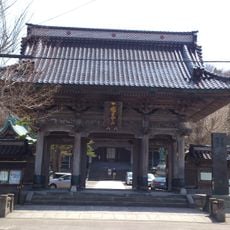
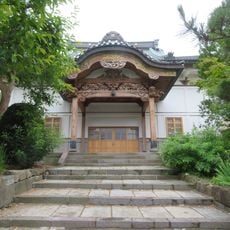
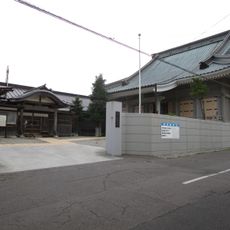
Shinshū Ōtani-ha Hakodate Betsuin is a Buddhist temple in Hakodate, Japan, built from reinforced concrete in a modern Japanese architectural style. The complex consists of a main hall and a bell tower that together form the core of the site.
The temple traces its origin to 1641, when Jōgen, sixth abbot of Sen'nen-ji in Matsumae, founded an Amida hall at Kikonai in Kamiiso District. It moved to Hakodate in 1710 and became a branch temple of Hongan-ji in 1876. The Meiji Hakodate fire of 1907 destroyed the halls; the main hall was completed in November 1915 to a design by the ninth Itō Heizaemon, with Kida Yasuzō carrying out the work after Itō's death.
The temple belongs to the Shinshū Ōtani-ha school and looks to Higashi Hongan-ji in Kyoto as its head temple, so it is also called Higashi Hongan-ji Hakodate Betsuin. In October 2022, before restoration work began, a ceremony moved the Amida Buddha image and a portrait statue of Shinran from the inner sanctuary. The temple also has five branch temples in Hakodate, including Chitose and Honmachi.
The temple is easy to reach on foot and sits close to other historic sites in the Motomachi neighborhood of Hakodate. A visit fits naturally into a walk through that part of the city.
Architect Ito Heizaemon designed the building to carry traditional Buddhist forms while using a material that was new to temple construction at the time. The result shows how a Meiji-era craftsman translated familiar shapes into concrete without abandoning them.
The community of curious travelers
AroundUs brings together thousands of curated places, local tips, and hidden gems, enriched daily by 95,042 contributors worldwide.